
Roofing Advice
What Is the Best Roofing Material for an Irish Home?
There is no such thing as the best roofing material full stop. The right covering for a bungalow on an exposed coastal site is not necessarily the right covering for a Victorian terrace in the middle of Dublin, and the right covering for a steep slated roof is rarely the right approach for a flat-roofed extension out the back.
This guide sets out the main pitched and flat roofing materials used on Irish homes, what tends to suit them and what tends to work against them, so that when you are looking at a new roof you know what questions to ask rather than which brand name to chase.
We are not going to tell you one material beats all the others, because it does not. What we will do is explain the factors that actually decide the answer for a specific roof, and price the options once we have looked at yours.
- The right material depends on the roof, not a general ranking
- Pitch, exposure, structure and appearance all matter
- Detailing and fixings decide as much as the covering itself
Looking for the service itself? New Roofs & Roof Replacement in Dublin
Why 'best' depends on the roof, not the material
Roofing suppliers and some contractors like to talk about one material being categorically better than another. In practice, a covering that performs well on one roof can be the wrong choice on the house next door, because the two roofs differ in pitch, structure, exposure and appearance requirements.
Before any material gets discussed, a sensible starting point is what the roof actually needs: what pitch it is built at, what it currently weighs, how exposed the site is, what the area expects a roof to look like, and what condition the structure underneath is in. Those factors narrow the list of sensible options considerably, usually before cost or preference ever comes into it.
Roof pitch and design
Pitch is the single biggest factor in what a roof can even be covered with. Slates and tiles rely on overlap and gravity to shed water, so they need a minimum pitch to work reliably; go below it and water can be driven back up under the laps in wind-driven rain, which is exactly the kind of weather Ireland gets plenty of.
Flat and low-pitch roofs — commonly under about 10 to 15 degrees, though this varies by system — need a fully waterproof membrane rather than an overlapping covering, which is why extensions, dormers, garages and porches are so often finished in felt, GRP, EPDM or a liquid system rather than slate. See flat roofing and flat roof types for more on that side of things.
Complex roof shapes with multiple valleys, hips and junctions also affect the choice, since some coverings and detailing methods handle intricate geometry more easily than others. This is where good roof valley repairs and lead flashing experience becomes as important as the material itself.
Property type, age and streetscape
An 1890s red-brick terrace, a 1970s bungalow and a new-build estate house all carry different expectations. Older properties, particularly in protected structures or conservation areas, often need to retain natural slate or a specific profile to satisfy planning conditions or simply to sit properly on the street. If your property might be affected by conservation requirements, that is worth checking with your local authority before materials are chosen, not after.
Newer estates are frequently built to a uniform roofline using concrete or fibre cement tiles, and replacing one house's roof in a visibly different material can stand out in a way some homeowners are happy with and others are not. None of this is about performance; it is about what looks right on that particular house and street.
Existing structure and load
Roofing materials vary a good deal in weight. Natural slate and concrete tile are considerably heavier than fibre cement slate, and a roof structure that was designed and built for one covering is not automatically suitable for a heavier one without checking the rafters, purlins and battens can take the load.
This matters most when a roof is being re-covered rather than built new, and it is one of the reasons a proper inspection of the structure — not just the surface — should come before any material decision. Our roof inspections page covers what that involves.
Exposure: coastal sites, wind and driven rain
A roof on an exposed hillside or near the coast faces a harder job than the same design in a sheltered estate. Wind-driven rain, salt-laden air and higher wind loads all affect fixing specifications, the type of underlay used, and how detailing at ridges, verges and abutments needs to be handled.
This is less about which material to choose and more about how it is specified and fixed. A natural slate roof mechanically fixed and detailed for an exposed site can perform very differently to the same slate laid to a minimum specification, which is why storm damage so often exposes weak detailing rather than a poor choice of covering in the first place.
Natural slate
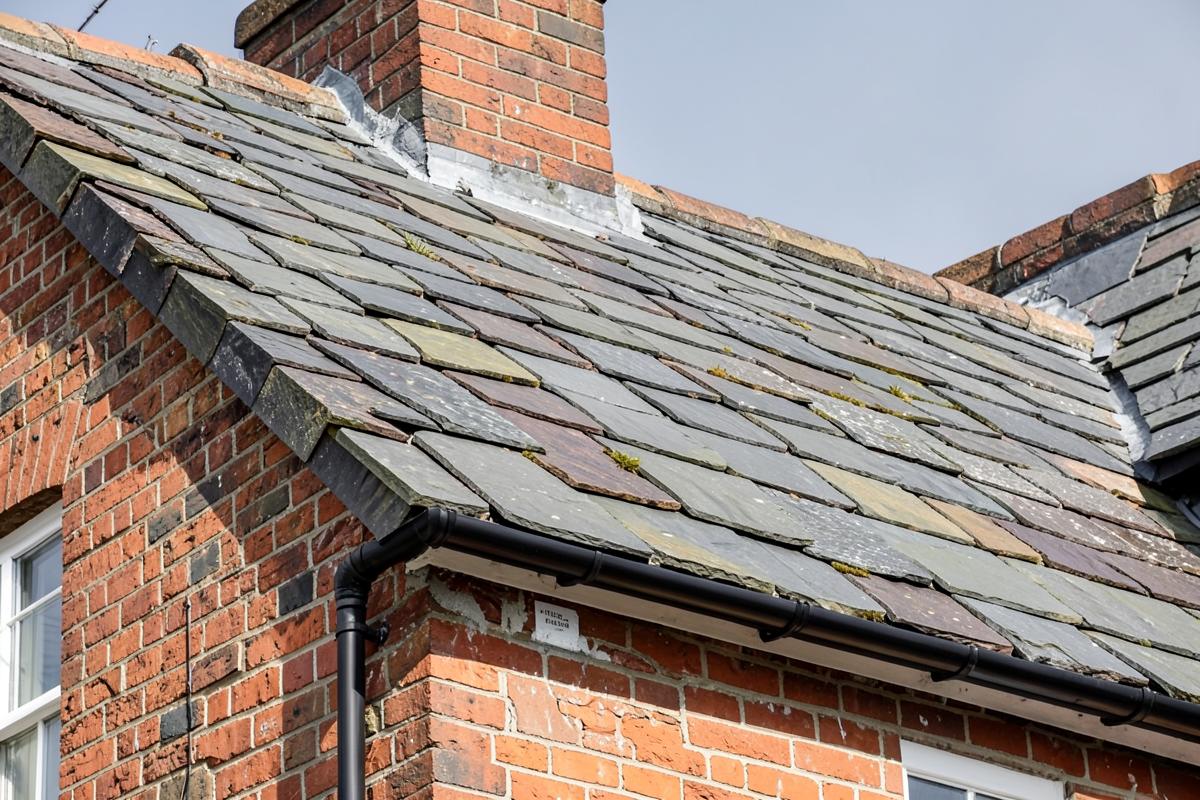
Natural slate is the traditional covering on much of Ireland's older housing stock and remains a common choice on period properties and conservation-sensitive projects. It has a distinctive, slightly irregular appearance that fibre cement and tile products aim to imitate but do not fully replicate.
Considerations: it is heavier than most alternatives, generally costs more to supply and install than fibre cement or concrete tile, and quality varies significantly by source, so specification matters. It suits steeper pitches well and is often the only acceptable option where planning or conservation rules apply. Repairs and replacement matching are covered on our slate roof replacement page, and slate vs tile compares it directly against tiled alternatives.
Fibre cement slate
Fibre cement slate is manufactured to a consistent size and profile, giving a uniform appearance that some homeowners prefer and others find less characterful than natural slate. It is considerably lighter than natural slate, which can matter on a structure with limited load capacity.
Considerations: it is generally more cost-effective to buy than natural slate, installs to a consistent specification, and is widely used across estate housing. It is less likely to satisfy conservation requirements where natural slate is specified, and appearance preference is genuinely subjective here.
Concrete tile
Concrete tile is common across newer housing estates in Ireland, available in a range of profiles and colours, and is one of the heavier roofing options.
Considerations: the weight needs to suit the structure it sits on, it is widely available and estate-uniform, and colour can fade or weather over time depending on the product and finish. It is a reasonable option on many standard pitched roofs, particularly where matching an existing estate roofline matters.
Clay tile
Clay tile is less common in Ireland than in some other markets but is used on some period and architecturally distinctive properties, often in a pantile or similar profile.
Considerations: appearance is a strong reason to choose it, it can be heavier than fibre cement, and sourcing and cost can be less straightforward than more mainstream products. It suits specific architectural styles rather than general use.
Flat and low-slope options: felt, GRP, EPDM and liquid systems
Where a roof or roof section is flat or low-pitch — extensions, garages, dormers, porches, balconies — the choice is between waterproof membrane systems rather than overlapping slates or tiles. Felt roofing is installed in bonded layers and handles complex detailing and awkward junctions well. GRP fibreglass roofing is applied wet and cures to a seamless laminate with no joints, suiting regular, well-prepared roofs particularly well.
EPDM roofing is a synthetic rubber membrane, often laid as a single sheet on domestic-sized roofs, and suits straightforward rectangular shapes. Liquid roofing systems are applied cold with a reinforcing fleece and are particularly good at dealing with awkward upstands and penetrations. None of these is universally superior; the right one depends on the roof's shape, deck condition, drainage and how it is used. Our felt vs fibreglass guide compares the two most commonly discussed options in more depth.
Why detailing, fixings, underlay and ventilation matter as much as the covering
A roof is a system, not a single product. The covering — slate, tile or membrane — is only one part of what keeps water out. The underlay beneath it, the fixings holding it down, the detailing at valleys, verges, ridges and abutments, and the ventilation of the roof space all affect how well that roof performs and how long it lasts before needing attention.
We regularly see roofs where an entirely reasonable covering has failed early because of poor underlay, inadequate fixing for the site's exposure, or ventilation that allowed condensation to build up in the roof space. Choosing a good material and then skimping on the detailing underneath it is one of the most common ways a roof underperforms. Guttering at the eaves and correctly formed lead flashing at junctions matter just as much as what is chosen for the main slopes.
How we approach material choice
When we look at a roof for a new covering or full replacement, we start with the structure, the pitch, the exposure and any planning or conservation constraints, then set out which materials genuinely suit that roof and why. We will tell you plainly where a cheaper option is a false economy and where a premium material would not actually add anything on that particular property.
If you are trying to work out roughly what a re-roof might involve, our new roof cost guide explains the factors that drive pricing, and roof repair vs replacement helps if you are still deciding between patching an existing roof and starting again.
Roof situation and materials usually worth considering
General starting points only — every roof still needs to be assessed individually before a material is confirmed.
| Roof situation | Materials usually worth considering |
|---|---|
| Period property or conservation area | Natural slate is often required or strongly preferred; clay tile on some period styles |
| Standard estate house, steep pitch | Fibre cement slate or concrete tile, matched to the surrounding streetscape |
| Older structure with limited load capacity | Fibre cement slate over heavier natural slate or concrete tile, subject to a structural check |
| Exposed coastal or hillside site | Any pitched covering can work, but fixing specification, underlay and detailing become critical |
| Extension, dormer or garage roof, low pitch | Felt, GRP fibreglass, EPDM or a liquid system rather than slate or tile |
| Complex roof shape with many upstands or penetrations | Felt or a liquid system, which dress into awkward details more easily than seamless GRP |
| Regular, well-prepared flat roof deck | GRP fibreglass or EPDM, both of which suit straightforward rectangular shapes well |
| Roof visible from upstairs windows | Any suitable covering, but appearance and finish become a real factor in the decision |
Get a price for your own roof
The only accurate figure is one based on your roof. Request a quotation or call Vantage Roofing and we will tell you what is involved.
Related Services
The roofing work behind this guide
Dublin city and county is our main service area, with additional coverage across Kildare, Meath and Wicklow.
New Roofs & Roof Replacement
Full re-roofing and roof replacement, where repairs are no longer a sensible long-term option.
Learn moreSlate Roof Replacement
Re-slating and full slate roof replacement where a covering has reached the end of its useful life.
Learn moreFlat Roofing
Flat roof repairs and replacement on extensions, dormers, garages and porches across Dublin.
Learn moreGRP & Fibreglass Roofing
Installation and repair of GRP fibreglass flat roofs on extensions, garages, porches and dormers.
Learn moreFelt Roofing
Felt flat roof repairs and replacement for garages, extensions, porches and outbuildings.
Learn moreEPDM Roofing
EPDM rubber flat roofing installed, repaired and replaced on extensions, garages and dormers.
Learn moreLiquid Roofing
Liquid-applied roof waterproofing for flat roofs, complex details, upstands and awkward junctions.
Learn moreFAQ
Best Roofing Materials — common questions
Is natural slate always better than fibre cement slate?
Not automatically. Natural slate suits period properties and conservation requirements well, but fibre cement is lighter, more consistent and often more practical on standard estate housing. Neither is universally superior.
Can I put a heavier tile on a roof built for a lighter covering?
Sometimes, but only after the existing rafters, purlins and battens have been checked to confirm they can safely carry the extra load. This should be assessed before any material is chosen, not after ordering.
Does a more expensive roofing material always last longer?
Not on its own. Installation quality, fixing specification, underlay and ventilation affect how a roof performs over time as much as the covering itself. A premium material poorly detailed can underperform a mid-range one installed properly.
What roofing material is best for a flat roof extension?
It depends on the roof's shape, deck condition and how it will be used. Felt and liquid systems handle complex detailing well; GRP and EPDM suit regular, well-prepared roofs. See our [flat roof types](/flat-roof-types) guide for a fuller comparison.
Do I need planning permission to change my roofing material?
It depends on the property, particularly if it is a protected structure or in a conservation area. Check with your local authority before committing to a material that differs from what is currently on the roof.
Will you recommend one specific material before seeing my roof?
No. We will discuss the general options with you over the phone, but a proper recommendation follows a look at the roof's pitch, structure, exposure and condition. Our [roof inspections](/roof-inspections) page explains what that involves.
More Guides
Other cost and decision guides
- Comparison GuideSlate vs Tile Roofing: What's the Difference?Read the guide
- Comparison GuideFlat Roof Types: Which Roofing System Is Right for Your Property?Read the guide
- Comparison GuideFelt vs Fibreglass Roofing: Which Is Better for Your Flat Roof?Read the guide
- Roofing AdviceHow Long Does a Roof Last in Ireland?Read the guide
Talk to a roofer
Need a Roofer in Dublin?
Need help with a roof repair, leak or roofing project? Call Vantage Roofing or request a quotation online. Fully insured, with 24/7 emergency roof repair call-outs.