Comparison Guide
Flat Roof Types: Which Roofing System Is Right for Your Property?
Many Irish homes have a flat roof somewhere — over an extension, a garage, a porch, a dormer or a bay. When one fails, the question is not only how to fix it but what to put back.
Vantage Roofing works with felt, GRP/fibreglass, EPDM and liquid roofing systems. This guide explains each at a practical level and, more usefully, explains what should drive the choice for a particular roof.
- The roof should determine the system, not the reverse
- Detailing and drainage matter more than the headline material
- All four systems are repairable when installed properly
Looking for the service itself? Flat Roofing in Dublin
Felt roofing
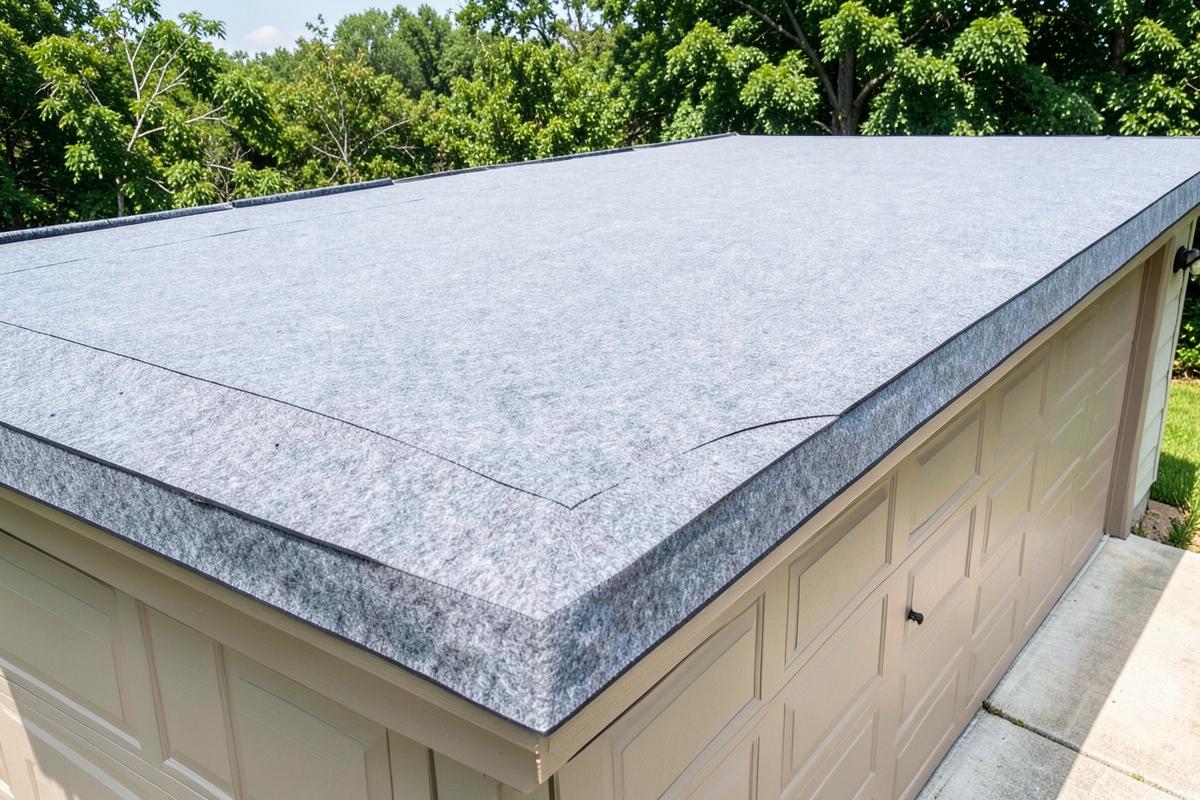
Modern felt roofing is a multi-layer bituminous system, a long way from the single-layer mineral felt many people picture. Layers are bonded together and dressed into upstands and outlets to form a continuous covering.
It is widely used on extensions, garages and outbuildings, it handles complex shapes and penetrations reasonably well, and localised damage can usually be patched into the existing covering. Quality depends heavily on the standard of installation at laps and details. See felt roofing.
GRP / fibreglass roofing
GRP is a glass-reinforced polyester laminate applied wet over a prepared deck and cured in place, producing a seamless covering with no joints in the field of the roof. Trims are bonded in as part of the laminate and a topcoat finishes it.
It suits regular-shaped roofs with good deck preparation — extensions, garages, porches, balconies and dormers. It needs dry conditions and a proper substrate to be installed correctly, which matters in Irish weather planning. See GRP fibreglass roofing.
EPDM rubber roofing
EPDM is a synthetic rubber membrane, usually bonded to the deck and often installed as a single sheet on domestic-sized roofs, which means very few joints. It is flexible and accommodates movement well.
It suits straightforward rectangular roofs particularly well, and is more awkward where there are many penetrations and complicated upstands, since every one of those has to be detailed individually. See EPDM roofing.
Liquid roofing systems
Liquid systems are applied cold, usually with a reinforcing fleece, and cure to form a seamless membrane that follows whatever shape it is applied over.
Their strength is detailing: awkward upstands, pipe penetrations, plant bases, balconies and refurbishment over existing coverings where conditions allow. They depend heavily on substrate preparation and correct application thickness. See liquid roofing.
What actually decides the right system
Considerations
- Shape and size of the roof, and how regular it is
- Number of penetrations, upstands, kerbs and abutments
- Deck type and condition — this frequently decides everything else
- Drainage: falls, outlet positions and whether water currently ponds
- How the roof is used: purely weatherproofing, foot traffic, a balcony, a terrace
- Whether it is visible from windows above, which makes appearance relevant
- Access for installation and for future maintenance
- Existing build-up and whether it can be overlaid or has to be stripped
Repairability and maintenance
All four systems can be repaired, and none of them are maintenance-free. Outlets and gutters need to be kept clear, debris should not be allowed to sit, and details should be looked at periodically.
Where a flat roof fails early, the cause is usually the same regardless of system: poor falls, an inadequate outlet, a badly formed upstand, or a covering laid over a deck that was already wet.
Choosing without being sold to
There is no universal winner among these systems, and we would be sceptical of anyone who tells you otherwise. What we do is look at the roof, the deck, the drainage and the detailing, then set out which systems are genuinely suitable and why.
Related: flat roofing, felt vs fibreglass and the flat roof cost guide.
Get a price for your own roof
The only accurate figure is one based on your roof. Request a quotation or call Vantage Roofing and we will tell you what is involved.
Related Services
The roofing work behind this guide
Dublin city and county is our main service area, with additional coverage across Kildare, Meath and Wicklow.
Flat Roofing
Flat roof repairs and replacement on extensions, dormers, garages and porches across Dublin.
Learn moreGRP & Fibreglass Roofing
Installation and repair of GRP fibreglass flat roofs on extensions, garages, porches and dormers.
Learn moreFelt Roofing
Felt flat roof repairs and replacement for garages, extensions, porches and outbuildings.
Learn moreEPDM Roofing
EPDM rubber flat roofing installed, repaired and replaced on extensions, garages and dormers.
Learn moreLiquid Roofing
Liquid-applied roof waterproofing for flat roofs, complex details, upstands and awkward junctions.
Learn moreRoof Inspections
A proper look at the roof and attic with a clear summary of roofing condition and recommended work.
Learn moreFAQ
Flat Roof Types — common questions
Which flat roof system lasts longest?
It depends on installation quality, detailing, drainage and how the roof is used far more than on the material name. We do not quote lifespan figures, because they would be meaningless without those factors.
Can I put a new system over my existing flat roof?
Sometimes, where the existing build-up is dry, sound and adequately drained. Where moisture is trapped or the deck has softened, overlaying it stores up a bigger problem.
Which system is best for a roof with lots of pipes and upstands?
Systems that can be dressed into awkward details — liquid systems and, in many cases, felt — tend to handle heavy detailing well. It still depends on the specific roof.
Do flat roofs need to be completely flat?
No, and they should not be. A flat roof needs a fall towards its outlets. Standing water is one of the most common reasons flat roofs fail early.
Can you walk on a flat roof?
Only where it has been designed and specified for foot traffic. If a roof is going to be used as a balcony or terrace, that needs to be part of the specification from the start.
More Guides
Other cost and decision guides
- Roofing AdviceHow Long Does a Flat Roof Last?Read the guide
- Roofing AdviceWhat Is the Best Roofing Material for an Irish Home?Read the guide
- Comparison GuideFelt vs Fibreglass Roofing: Which Is Better for Your Flat Roof?Read the guide
- Cost GuideFlat Roof Repair & Replacement Costs in DublinRead the guide
Talk to a roofer
Need a Roofer in Dublin?
Need help with a roof repair, leak or roofing project? Call Vantage Roofing or request a quotation online. Fully insured, with 24/7 emergency roof repair call-outs.