
Comparison Guide
Felt vs Fibreglass Roofing: Which Is Better for Your Flat Roof?
Felt and GRP fibreglass are the two flat roofing systems homeowners most often compare, usually when an extension or garage roof has come to the end of its life.
Both are used successfully on domestic flat roofs every day, and both fail when they are installed on an unsuitable roof or detailed badly. This guide compares them honestly, without declaring a winner that does not exist.
- Both work well on the right roof, installed properly
- Roof shape, deck condition and weather all affect the choice
- Neither is automatically cheaper or longer-lasting
Looking for the service itself? Flat Roofing in Dublin
How each system is installed
Felt is installed in bonded layers over the deck, with laps between sheets and details dressed into upstands, outlets and trims. Modern high-performance felts are a different product to the thin single-layer felt of older garage roofs.
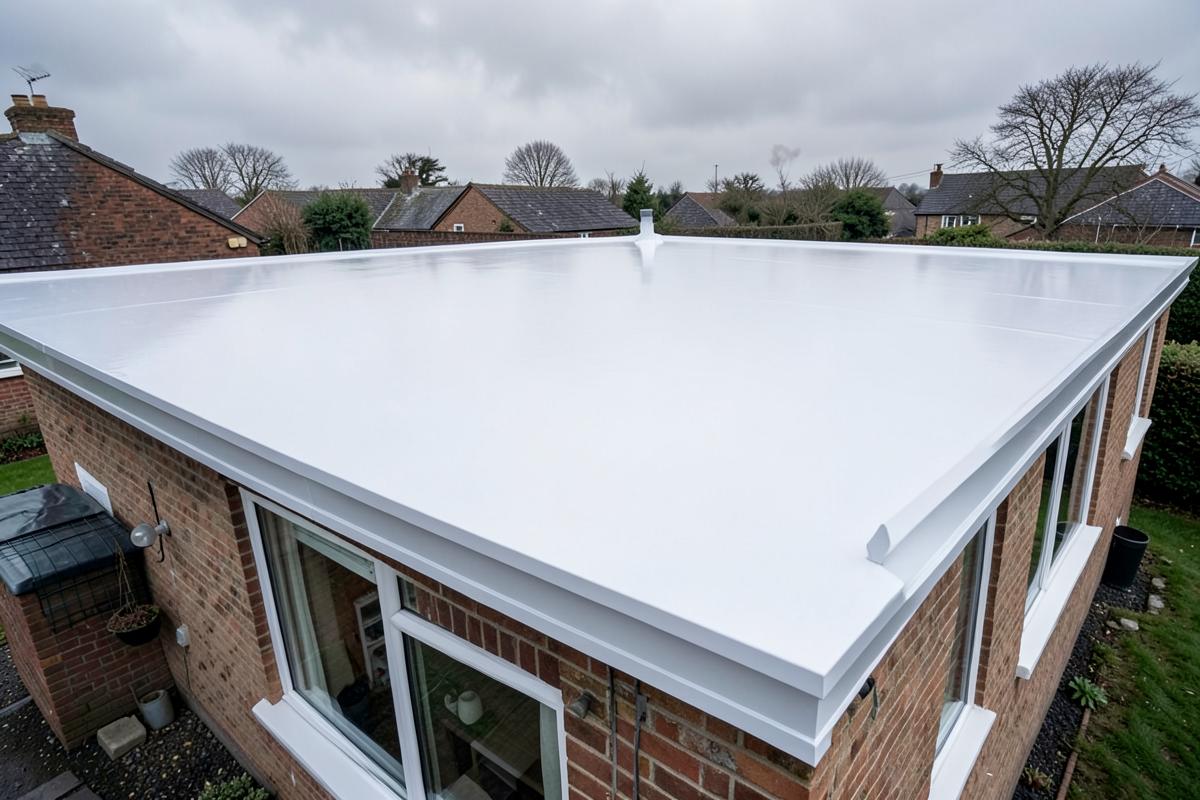
GRP is applied wet: a glass-reinforced polyester laminate over a prepared deck, with bonded trims and a topcoat, curing into a single seamless covering with no joints across the roof area.
Roof shape and detailing
Where a roof has many penetrations, changes of level, awkward upstands or complex junctions, a system that can be dressed in layer by layer is often the more practical route, and felt handles that well.
On regular, well-prepared rectangular roofs — a typical extension or garage — GRP's seamless finish is a genuine advantage, with no laps in the field of the roof at all.
Deck condition and preparation
GRP is unforgiving about the deck: it needs a sound, dry, correctly prepared board base, and where the existing deck is not up to it, re-decking becomes part of the job.
Felt is somewhat more tolerant of minor substrate imperfection, though laying any covering over a wet or failing deck is a mistake regardless of system. The deck is frequently the deciding factor rather than a preference between the two.
Weather and installation conditions
GRP has to be applied and cured in suitable conditions — dry, and within a workable temperature range. In an Irish winter, that can affect when the work can be programmed.
Felt is generally less restricted by conditions, which matters when a roof needs replacing during a wet period rather than in a settled dry spell.
Repairs and future maintenance
Felt repairs are straightforward: damaged areas are cut out and patched into the surrounding layers by any competent roofer.
GRP repairs are also entirely possible — the damaged laminate is prepared and re-laminated — and a good repair is effectively invisible, though it needs someone familiar with the system. Both benefit from keeping outlets and gutters clear.
Appearance
Where a flat roof is overlooked from windows above, appearance is worth thinking about. GRP gives a smooth, uniform topcoat finish in a choice of colours. Felt gives a mineral or capped finish that looks like a traditional flat roof.
This is a matter of preference rather than performance, but it is a real consideration on dormer roofs and extensions under upstairs windows.
Cost and lifespan: what we will not claim
We will not tell you that one is cheaper or that one lasts a set number of years longer. Installed cost depends on the deck, the preparation, the detailing and the access far more than on which of the two you choose, and lifespan depends on installation quality and drainage.
What we will do is look at the roof and price the systems that genuinely suit it, so you are comparing real figures for your property rather than industry generalisations. See the flat roof cost guide.
Which should you choose?
Ask what the deck condition is, how complex the detailing is, how the roof drains, when the work needs to happen and whether the roof is on view. The answers usually point clearly to one system.
Related: felt roofing, GRP fibreglass roofing, flat roofing and flat roof types. If neither suits the roof, EPDM roofing and liquid roofing are the other two systems we install.
Get a price for your own roof
The only accurate figure is one based on your roof. Request a quotation or call Vantage Roofing and we will tell you what is involved.
Related Services
The roofing work behind this guide
Dublin city and county is our main service area, with additional coverage across Kildare, Meath and Wicklow.
Felt Roofing
Felt flat roof repairs and replacement for garages, extensions, porches and outbuildings.
Learn moreGRP & Fibreglass Roofing
Installation and repair of GRP fibreglass flat roofs on extensions, garages, porches and dormers.
Learn moreEPDM Roofing
EPDM rubber flat roofing installed, repaired and replaced on extensions, garages and dormers.
Learn moreLiquid Roofing
Liquid-applied roof waterproofing for flat roofs, complex details, upstands and awkward junctions.
Learn moreFlat Roofing
Flat roof repairs and replacement on extensions, dormers, garages and porches across Dublin.
Learn moreRoof Repairs
Repairs to slate, tile and flat roofs — from a handful of slipped slates to recurring leaks.
Learn moreFAQ
Felt vs Fibreglass — common questions
Is fibreglass better than felt for a flat roof?
Not automatically. GRP suits regular, well-prepared roofs and gives a seamless finish; felt handles complex detailing and awkward conditions well. The roof decides.
Is felt always the cheaper option?
No. Installed cost depends on deck preparation, detailing and access, and on some roofs the difference between the two is small.
Can fibreglass be laid over an old felt roof?
Generally not directly. GRP needs a sound, dry and properly prepared deck, so the existing covering usually has to come off first.
Which is easier to repair later?
Both are repairable. Felt patching is very common and straightforward; GRP is re-laminated and, done well, the repair is barely visible.
How do I know which one suits my roof?
Have the roof assessed. We look at the deck, the falls, the detailing and the access, then explain which systems are suitable and quote for the realistic options.
Talk to a roofer
Need a Roofer in Dublin?
Need help with a roof repair, leak or roofing project? Call Vantage Roofing or request a quotation online. Fully insured, with 24/7 emergency roof repair call-outs.