
Areas We Cover
Vantage Roofing provides professional roofing services across Dublin, with coverage also extending to Kildare, Meath and Wicklow.
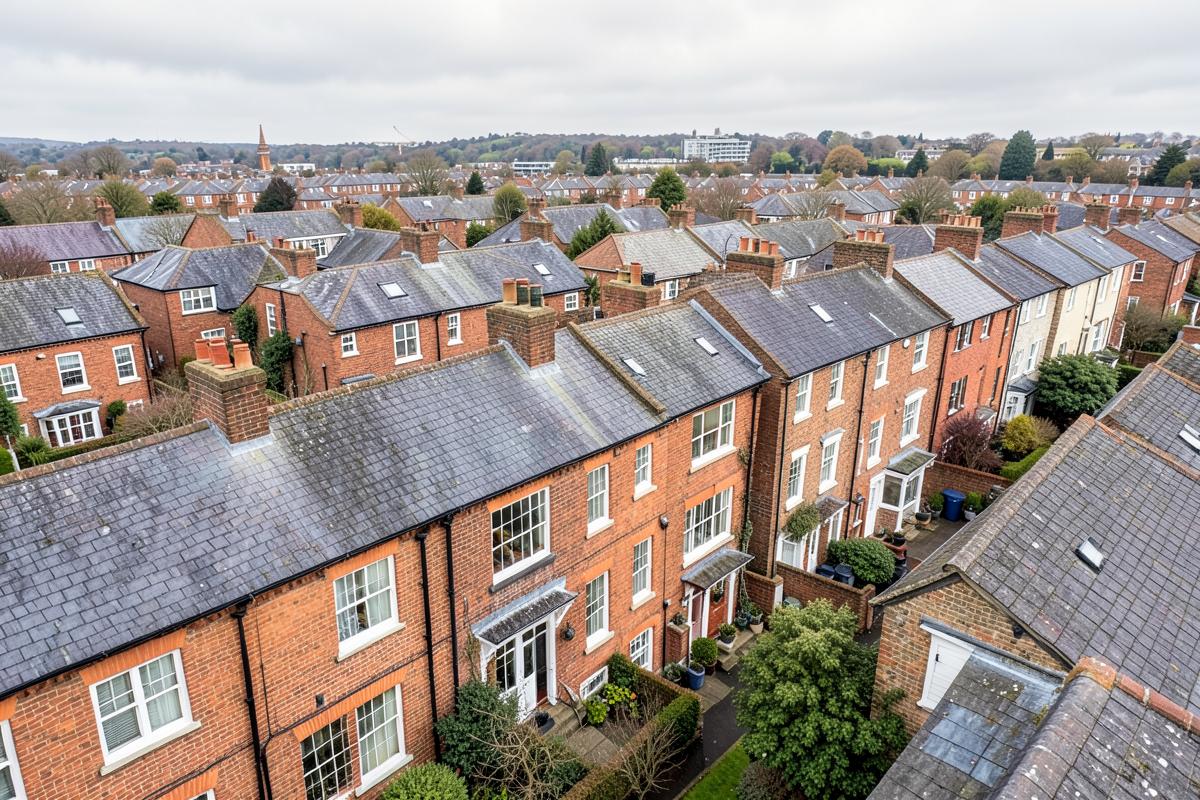
Our base in Dublin 4
Vantage Roofing's business address is 39 Northumberland Rd, Ballsbridge, Dublin 4. Two mobile roofing teams work from the road across the city, so coverage does not depend on how close an area is to that address — but Dublin 4 and the neighbourhoods around it are the part of Dublin we know best.
Start with the Ballsbridge roofing page if you are in Dublin 4, or pick your region below.
Regions
Roofing coverage by region
Each region page explains the roof types and recurring problems across that part of the county, and lists the areas within it.
North Dublin
Roofing across the northside city suburbs — repairs, slate and tile work, chimneys, flat roofs and guttering. Fully insured, with 24/7 emergency roof repair call-outs.
View North Dublin coverageNorth County Dublin
Roofing for the Swords, Malahide and coastal north county corridor — repairs, tile and slate work, storm damage, flat roofs and guttering. Fully insured, 24/7 emergency call-outs.
View North County Dublin coverageSouth Dublin
Roofing across the south city and suburbs — period slate and lead, chimneys, tiled roofs, flat extensions and roofline. Fully insured, with 24/7 emergency call-outs.
View South Dublin coverageWest Dublin
Roofing across Dublin 15 and the western suburbs — tiled roof repairs, ridge and verge, roofline, flat extensions and storm damage. Fully insured, 24/7 emergency call-outs.
View West Dublin coverageLocal Pages
Dublin city & Dublin 4
The city itself and the established Dublin 4 and Dublin 6 neighbourhoods, including Ballsbridge, where our business address is.
Roofers in Dublin
Dublin's housing stock runs from Victorian and Edwardian terraces with natural slate and cast iron rainwater goods, through mid-century estates with concrete tiles, to recent developments and extensions with flat roofs. Each generation of roof fails in its own way, and the right repair depends on knowing which you are dealing with.
View Dublin pageRoofers in Ballsbridge
Ballsbridge is where Vantage Roofing's business address is: 39 Northumberland Rd, Dublin 4. It is the part of the city we know best, and Dublin 4 roofs — the tall Victorian and Edwardian houses along the Northumberland Road and Pembroke Road corridors, the redbrick terraces off Shelbourne Road and Herbert Park, and the later homes and apartment buildings mixed in among them — are regular work for us.
View Ballsbridge pageRoofers in Donnybrook
Donnybrook is long-established south-city housing: Victorian and Edwardian terraces along the main roads, larger detached and semi-detached houses on the roads running off them, and a steady layer of later extensions, conversions and apartment buildings threaded through it all. Most of the older roofs are natural slate, and a great many of them still carry their original covering.
View Donnybrook pageRoofers in Sandymount
Sandymount's roofline is largely Victorian and Edwardian redbrick terraces with natural slate, cast iron rainwater goods and, on many houses, a rear return carrying a flat or low-pitch roof. Properties closer to the strand and seafront can be somewhat more exposed to wind-driven rain than those a few streets back, though the difference is usually a matter of degree rather than a hard line.
View Sandymount pageRoofers in Ranelagh
Ranelagh's period terraces are largely slated, with rear returns that step down from the main roof in the way common to Dublin's older streets. Between the main slope and the return there is often a hidden, or 'secret', gutter — a detail that works well when maintained but causes trouble quickly once it silts up or its lining fails, since any leak from it tends to appear well away from the actual source.
View Ranelagh pageRoofers in Rathmines
Rathmines is largely period red-brick terraces, many of them subdivided into flats or apartments over the years, and roofs here come with the sort of detailing that older, denser housing tends to acquire: parapet walls, hidden valley gutters and a chimney stack shared between more than one dwelling.
View Rathmines pageLocal Pages
North Dublin
The northside city suburbs, from Clontarf and Drumcondra out to Santry and Finglas.
Roofers in Clontarf
Clontarf's roofline is dominated by redbrick Victorian and Edwardian terraces along the seafront and the streets running back from it, many still carrying their original natural slate. Being this close to the water means these roofs take a steady battering from wind-driven rain and salt-laden air, which is harder on mortar, flashing and fixings than it is further inland.
View Clontarf pageRoofers in Raheny
Raheny sits a little further back from the coast than Clontarf or Sutton, but it still gets a good share of wind-driven rain coming in off the bay, and its roofs reflect a similarly mixed history. Older houses around the village and St Anne's carry natural slate, while the larger semi-detached estates built through the mid-20th century mostly use concrete tile roofs that are now old enough to need attention to their details.
View Raheny pageRoofers in Artane
Artane grew rapidly through the middle of the last century, and much of the area is made up of large estates of semi-detached and terraced houses built with concrete tile roofs. That building era is now well past the point where original ridge mortar, verges and rooflines start needing genuine attention rather than a quick patch.
View Artane pageRoofers in Drumcondra
Drumcondra is one of Dublin's older established suburbs, and its roofs show it: long runs of red-brick terraces under natural slate, chimney stacks shared between neighbouring houses, and narrow valleys where adjoining roof pitches meet. It is roofing that rewards experience, because the details holding these roofs together are now a century old in many cases.
View Drumcondra pageRoofers in Glasnevin
Glasnevin has an older housing stock than much of the north city around it: red brick terraces and 1930s to 1950s semi-detached houses laid out over several decades, many with natural slate still on the main roof and a good number re-covered in tile at some point since.
View Glasnevin pageRoofers in Santry
Santry is mainly estate and suburban housing built from the mid twentieth century onwards, with concrete tile roofs on long terraces and semi-detached runs, plus apartment and commercial buildings along the main roads and towards the airport side of the area.
View Santry pageRoofers in Finglas
Finglas is built largely from mid-century local authority and private estate housing, with long terraces and semi-detached runs carrying concrete tile roofs, plus later infill, apartment blocks and commercial units along the main routes.
View Finglas pageLocal Pages
North county Dublin
The Swords corridor and the coastal towns north of the city.
Roofers in Swords
Swords has grown considerably over the last few decades, and its roofs reflect that: older properties around the village and Main Street, large estates built from the 1970s onwards with concrete tile roofs, and newer developments around Applewood and Boroimhe where the detailing matters more than the age of the covering.
View Swords pageRoofers in Malahide
Malahide combines older coastal properties near the village and estuary with substantial detached and semi-detached homes along the surrounding roads. Being on the coast, roofs here deal with more wind and more salt-laden air than inland areas a few kilometres away, and that difference is visible in how they age.
View Malahide pageRoofers in Portmarnock
Portmarnock's housing sits close to a long stretch of beach, and roofs here often face similar conditions to the rest of the north Dublin coast — salt-laden air and driving rain that ask more of flashings, fixings and gutters than a sheltered inland site would. A good number of houses were built from the 1970s onwards with concrete tile roofs, and these are now at an age where valleys, ridges and flashings commonly need attention even though the tiles themselves have plenty of life in them.
View Portmarnock pageRoofers in Howth
Howth sits fully exposed to the sea, and houses on the hill and around the harbour tend to take more of a battering from wind and driving rain than most parts of Dublin. That exposure shows up first in ridge tiles, verges and chimney flashings — the details at the edges of a roof, rather than the main covering, are usually what gives way first.
View Howth pageRoofers in Sutton
Sutton sits on the narrow strip of land between Dublin Bay and the open sea, which means houses here can be exposed to wind and salt air from more than one direction depending on their position. That exposure tends to show up first in chimney flashings, ridge tiles and gutters rather than in the main roof covering itself.
View Sutton pageLocal Pages
South Dublin suburbs
The southern suburbs, from Terenure and Crumlin out to Dundrum, Sandyford and Tallaght.
Roofers in Terenure
Terenure is well-established housing, with a good number of properties old enough to carry natural slate and a later generation finished in concrete tile. Knowing which you have matters, because natural slate and modern interlocking tiles are repaired quite differently, and a slater used to one does not always handle the other well.
View Terenure pageRoofers in Crumlin
Crumlin is a settled Dublin 12 area of long terraces and semi-detached houses laid out in the middle of the last century, with later infill and apartment development along the main roads. The roofs are a mix: original slate on plenty of houses, tile re-coverings on plenty more, and almost universally a rear extension added at some stage.
View Crumlin pageRoofers in Walkinstown
Walkinstown is dominated by hipped, tiled semi-detached and short-terrace housing laid out around the Walkinstown roundabout and the roads running off it, with garages, side passages and later rear extensions added to a great many of them. That gives the area a different roofing character to neighbouring Crumlin, where original slate is still common: here the typical call-out is about a tiled roof losing its mortar details rather than a slate roof losing its fixings.
View Walkinstown pageRoofers in Rathfarnham
Rathfarnham mixes some genuinely old housing near the village with much larger estates built out towards the foothills from the 1960s onwards. That range matters: a cottage roof close to the centre and a 1970s semi further up the hill fail for different reasons, and a repair that suits one will not suit the other.
View Rathfarnham pageRoofers in Dundrum
Dundrum's housing spans several distinct eras: older houses close to the village, mid-century semis further out, and a good deal of denser apartment and mixed-use development that has grown up around the town centre and shopping district. That variety means we see a wider spread of roof types here than in most areas we cover — pitched slate and tile alongside a considerable amount of flat roofing.
View Dundrum pageRoofers in Stillorgan
Stillorgan is largely mid-century suburban housing: semi-detached and detached homes laid out from the 1950s onwards, with concrete tile roofs, generous eaves and, in most cases, a rear extension or attic conversion added at some point since. It is a different roofing proposition from the period terraces closer to the city, and it fails in different ways.
View Stillorgan pageRoofers in Sandyford
Sandyford is two roofing jobs in one area. There is the established residential side — tiled pitched roofs on suburban houses, many extended, dormered or converted at some point — and there is the newer development and business park side, where flat and low-pitch roofs, membranes, parapets and drainage outlets dominate.
View Sandyford pageRoofers in Tallaght
Tallaght and Dublin 24 contain a large amount of housing built from the 1970s and 1980s onwards, much of it with concrete tile roofs that are now well into middle age, alongside newer developments around the town centre, Citywest and Firhouse.
View Tallaght pageLocal Pages
Coastal south Dublin
Blackrock down the coast to Killiney, where exposure decides what needs attention first.
Roofers in Blackrock
Blackrock's roofs range from large Victorian and Edwardian villas set back from the seafront to redbrick terraces closer to the village and the DART line, with newer apartment and infill developments carrying flat and low-pitch roofs mixed in among them. The older stock tends to be natural slate, laid on timber that has usually stood the test of time but is now at the age where fixings and flashings need attention.
View Blackrock pageRoofers in Monkstown
Monkstown is period south-coastal Dublin: Victorian villas and terraces on the roads above the seafront, granite and stucco frontages, tall chimney stacks, and natural slate roofs with lead at the valleys, abutments and parapets. Later houses, apartment conversions and rear extensions sit alongside them, usually carrying flat sections.
View Monkstown pageRoofers in Dún Laoghaire
Dún Laoghaire's roofline is dominated by tall Victorian terraces and townhouses close to the harbour, many still carrying their original natural slate, alongside later housing further up the hill towards Glenageary and Monkstown. The harbour-side terraces in particular sit directly in the path of weather coming off the bay, and that steady exposure is part of what shapes how those roofs age.
View Dún Laoghaire pageRoofers in Dalkey
Dalkey is built on rock and hills as much as on flat ground, and a good number of its houses sit in genuinely elevated, exposed positions with a clear line to the sea. That elevation can mean more wind loading on a roof than an equivalent house tucked lower down, and it is often the older stone and slate-roofed properties around the village and up towards Sorrento and Vico Road that show the effects of it.
View Dalkey pageRoofers in Killiney
Killiney's housing sits on rising ground above the bay, and exposure is the defining fact about its roofs. Large detached houses on the hill, period homes on the roads down towards the coast and later developments all share the same condition: wind arrives with nothing in front of it, and it finds whatever detail on the roof is weakest.
View Killiney pageLocal Pages
West Dublin
Dublin 15 and the western suburbs, from Castleknock across to Lucan and Clondalkin.
Roofers in Blanchardstown
Blanchardstown and the wider Dublin 15 area is largely made up of estates built from the 1970s through to recent developments, with concrete tile roofs predominating and a substantial number of extensions and dormer conversions added since. Castleknock, Clonsilla, Ongar, Tyrrelstown and Mulhuddart all sit within the same broad pattern.
View Blanchardstown pageRoofers in Castleknock
Castleknock's housing spans a wider mix of ages and roof shapes than many Dublin suburbs, from older properties near the village to substantial detached and semi-detached houses built over the last few decades, many with dormer windows, roof lights and more complex rooflines than a simple two-pitch terrace. That complexity is where most of the problems we're called to actually start.
View Castleknock pageRoofers in Lucan
Lucan spans older properties around the village and along the Liffey valley, extensive estate housing built through the 1990s and 2000s, and newer developments towards Adamstown. Few parts of Dublin present quite such a mix within a short distance.
View Lucan pageRoofers in Clondalkin
Clondalkin sits alongside some of the oldest streets in this part of Dublin, with a village core of older properties surrounded by much larger estates built from the latter half of the last century onwards. That mix means we see two quite different sets of roofing problems in the same area, depending on which era of housing a call-out is for.
View Clondalkin pageWider Coverage
Other Dublin areas we work in
These smaller districts are covered on the same runs as the areas above. The nearest area or region page is the best guide to the roofs and the work involved.
- Marino
- Fairview
- Donnycarney
- Coolock
- Baldoyle
- Donabate
- Skerries
- Rush
- Balbriggan
- Palmerstown
- Chapelizod
- Rathcoole
- Saggart
- Firhouse
- Templeogue
- Knocklyon
- Churchtown
- Booterstown
- Shankill
- Harold's Cross
- Drimnagh
Beyond Dublin, we also carry out roofing work across Kildare, Meath, Wicklow.
Get in touch
Not sure if we cover your area?
Send us your area or Eircode and we will confirm.
Talk to a roofer
Need a Roofer in Dublin?
Need help with a roof repair, leak or roofing project? Call Vantage Roofing or request a quotation online. Fully insured, with 24/7 emergency roof repair call-outs.