
Roofing Advice
What Should You Check After a Storm?
After a storm, it's worth taking a careful look at your roof and home — but everything you check should be done safely, from ground level, from a window, or from inside the house. There is never a need to climb onto a roof or up a ladder to assess storm damage yourself.
This guide sets out what to look for, where to look from, and why some of the most serious defects are the ones you cannot see at all without a proper inspection. See our storm damage page for how we assess and repair storm-affected roofs.
- Everything on this list can be checked safely from ground level, a window or inside the house
- Never climb onto a roof or up a ladder to inspect storm damage
- A roof can look fine and still be letting water in — many defects only show up in a proper inspection
Looking for the service itself? Storm Damage Repairs in Dublin
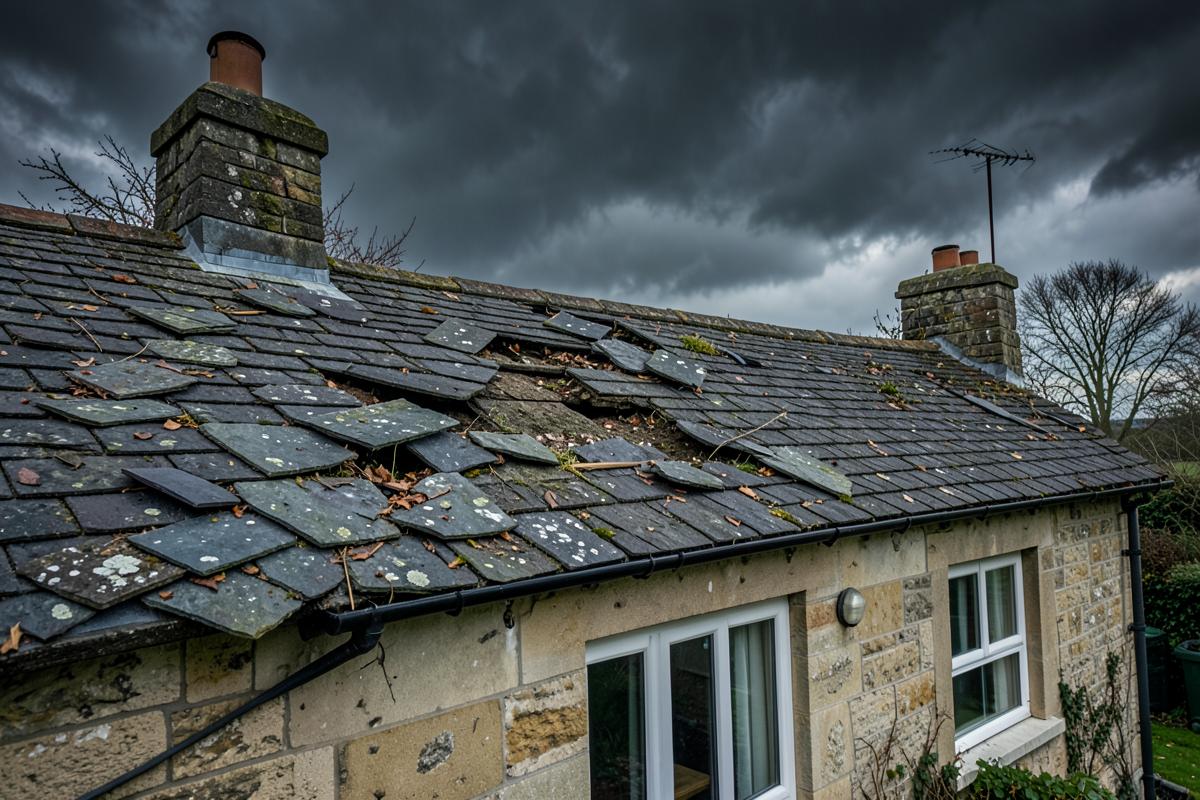
From ground level: what to look for outside
Walk around the outside of the property, at a safe distance from the building and away from anything that looks like it could fall, and look up.
Ground-level checks
- Slates or tiles that look displaced, slipped, cracked or missing compared to the surrounding roof
- Debris in the garden, driveway or on the path — broken slate, tile fragments, pieces of flashing or ridge material
- Debris sitting in or overflowing from gutters, or gutters and downpipes that look sagging, pulled away from the fascia, or detached
- Ridge tiles or verge details that look disturbed, lifted or out of line along the top or edges of the roof
- Lead flashing that looks lifted, curled back or displaced where you can see it around chimneys, walls or roof junctions
- Damage to the chimney stack itself — leaning, cracked or loose brickwork, or a chimney pot that looks knocked out of position
From inside the house: signs of a problem above
Storm damage often shows up inside the house before it's obvious outside, so a walk through the rooms and landing is worth doing as well.
Indoor checks
- New staining, discolouration or damp patches on ceilings or walls, particularly on upper floors
- Any dripping, however small, especially during or shortly after rain
- Damp patches or a musty smell that weren't there before the storm
- Water tracking down a chimney breast or appearing around a fireplace
- If your attic is safely and easily accessible, a look for daylight showing through the roof, wet timber, or damp insulation — do not attempt this if access is awkward or unsafe
Other things worth checking
A few areas are easy to overlook but worth including in your check, all still viewable safely from ground level or from an upstairs window.
Additional checks
- Gutters overflowing during rain, or downpipes that appear blocked — this can point to a gutter problem rather than the roof itself, though the two are often connected
- If you have a flat roof extension or garage that can be seen from an upstairs window, standing water, debris, or an obviously lifted or torn covering — see also flat roof ponding water
- Any sign of water staining around roof windows or skylights inside the house — see Velux and skylight repairs and roof leaking around skylight
- A roof valley that looks obviously blocked with debris where it's visible — see blocked roof valley
Why a roof can look fine and still be letting water in
Many of the defects that cause leaks after a storm are simply not visible from the ground. A slipped slate three courses up a slope, a cracked but still-in-place tile, a nail that has worked loose under a slate, or a small split in a flashing detail can all let water in without anything looking obviously wrong from below.
Water also does not necessarily show up inside the house straight away. It can sit in insulation or track along timbers for some time before a stain appears on a ceiling, which means a roof can have sustained real storm damage that only becomes obvious weeks later, in the next heavy rain. This is exactly why a proper inspection matters after a significant storm, even where nothing looks wrong.
When should I arrange a roof inspection?
It's worth arranging a professional roof inspection after any storm that involved strong winds, if you noticed any of the signs above, or simply as a precaution if your roof is older or has needed repairs before. An inspection gets someone safely onto the roof, at height and with the right equipment, to check details that cannot be assessed from the ground — something we would never ask a homeowner to do themselves.
If you're weighing up whether it's worth it, our roof inspection cost guide explains what's involved and what tends to affect the price.
When it's an emergency
Some situations should not wait for a routine inspection to be arranged.
Call immediately if you see
- Active, significant water coming into the house
- Material that looks dangerously loose, lifted or about to come down, especially anything overhanging a path, driveway or road
- A chimney stack or large section of roof covering that looks structurally compromised
Getting help
Emergency roof repair call-outs are available 24 hours a day, 365 days a year on 087 466 6010. For anything less urgent, arrange a proper roof inspection or get in touch about storm damage repairs to have the roof checked and any repairs properly assessed. If you're dealing with active ingress right now, see water coming through ceiling for immediate safety steps.
Get a price for your own roof
The only accurate figure is one based on your roof. Request a quotation or call Vantage Roofing and we will tell you what is involved.
Related Services
The roofing work behind this guide
Dublin city and county is our main service area, with additional coverage across Kildare, Meath and Wicklow.
Storm Damage Repairs
Assessment and repair of wind and storm damage, with photographs of the damage and completed work where appropriate.
Learn moreRoof Inspections
A proper look at the roof and attic with a clear summary of roofing condition and recommended work.
Learn moreRoof Repairs
Repairs to slate, tile and flat roofs — from a handful of slipped slates to recurring leaks.
Learn moreLeaking Roof Repairs
Tracing the true source of a leak and repairing it properly, rather than patching where the stain appears.
Learn moreEmergency Roof Repairs
Urgent help for active roof leaks, storm damage and roofing problems that cannot safely wait — 24/7 call-outs.
Learn moreFAQ
Checking a Roof After a Storm — common questions
Should I go up into the attic to check for storm damage?
Only if the attic is already safely and easily accessible, with good flooring and lighting. Do not go up if access is awkward, unlit or unsafe — leave that check to a professional inspection instead.
Is it safe to use binoculars from the ground to check the roof?
Yes, that's a sensible way to get a closer look at ridge tiles, flashing or slipped slates without needing to climb anywhere, and it can help you describe the problem accurately when you call for help.
My roof looks fine after the storm — do I still need to worry?
Not every storm causes damage, but a roof can look fine from the ground and still have a defect that only shows up in a proper inspection or during the next heavy rain. If the storm was significant, it's worth having it checked.
How long after a storm can damage show up inside the house?
It can take days or even weeks. Water can track along timbers or sit in insulation for a while before it reaches a ceiling and becomes visible as staining or dripping.
Should I take photos of storm damage?
Yes, where it's safe to do so from ground level or a window — this can be useful for insurance purposes and helps a roofer understand the situation before attending.
Do you deal with insurance claims for storm damage?
We can provide a clear written assessment of the damage and repairs needed, which is generally what an insurer will ask for. Speak to us about your particular situation when you get in touch.
More Guides
Other cost and decision guides
Talk to a roofer
Need a Roofer in Dublin?
Need help with a roof repair, leak or roofing project? Call Vantage Roofing or request a quotation online. Fully insured, with 24/7 emergency roof repair call-outs.