
Roofing Problem
Water Coming Through Your Ceiling? What to Do
Water actively coming through a ceiling means rainwater is getting past the roof covering somewhere and has already soaked through the structure above. Deal with safety first, move what you can out of the way where it is safe to do so, and get the roof looked at — the water will keep arriving every time it rains until the defect is found.
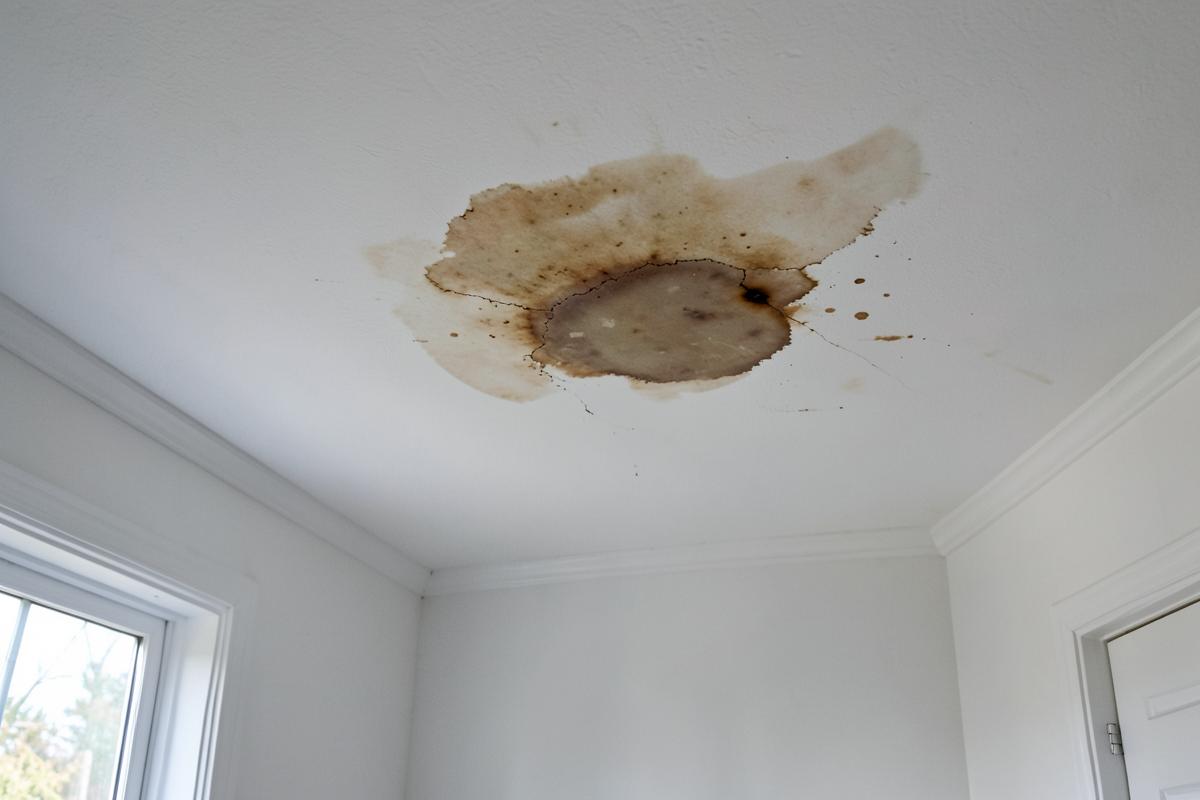
The important thing to understand is that the wet patch on your ceiling is where water finally emerged, not necessarily where it got in. Water can run along felt, battens and rafters for several metres before it drops.
- Treat water near lights, switches or wiring as an electrical risk
- Do not go up onto the roof to look
- 24/7 emergency roof repair call-outs available
Looking for the repair work itself? Emergency Roof Repairs in Dublin
Before anything else — safety
Active water ingress inside a house is not just a roofing problem. Ceilings hold water, and water finds electrics.
- If water is at or near a light fitting, switch, socket or any wiring, do not touch it and do not use that circuit. Seek appropriate qualified assistance for anything electrical.
- A ceiling that is bulging, sagging or dripping heavily may be holding a considerable weight of water. Keep people and pets out of the room.
- Move or cover belongings only where you can do so safely and away from the affected area.
- Do not climb onto the roof, and do not send anyone else up. A wet roof is dangerous, and nothing you can see from up there changes what needs to happen next.
- Put a container under a steady drip if you can reach it safely, and empty it before it overflows.
Active leak or old staining?
It is worth working out which of the two you are looking at, because it changes how urgent the situation is.
An active leak wets during or shortly after rain, spreads, and often drips. Historic staining is dry to the touch, has a defined edge, and does not grow. Old staining still means water got in at some point, but it does not need a call at two in the morning — it needs the roof checked before the next spell of bad weather.
Signs it is happening now
- A damp patch that visibly grows while it is raining
- Dripping, or water running down a wall below the ceiling line
- Paint or plaster blistering, bubbling or lifting
- A ceiling that feels heavy, soft or is beginning to bulge
- Water appearing at a light fitting or ceiling rose
Possible roofing causes
Possible causes include the list below. None of them can be confirmed from inside the house alone, which is why an inspection is normally the first step rather than a guess.
What we most often find
- Broken, cracked, slipped or missing roof coverings — see slate and tile repairs
- Failed or displaced lead flashing at a chimney, wall abutment or parapet
- A defect at the chimney: pointing, weathering or the roof junction around the stack — see chimney repairs
- A split, corroded, blocked or overwhelmed valley — see roof valley repairs
- A defect in a flat roof covering, upstand, edge detail or outlet — see flat roofing
- Wind or storm damage that has opened up part of the roof
- Water tracking in around a roof window — see Velux and skylight repairs
- Rainwater goods overflowing back into the roof or wall — see guttering
Why the leak shows up in the wrong place
This is the part that catches most people out. Water entering at a chimney abutment can run down the back of the stack, across the underlay, along a rafter and drop through the ceiling in a different room entirely. A leak appearing in the middle of a landing ceiling does not mean the defect is in the middle of the roof.
It is also why a repair based purely on where the stain is can fail. The stain tells us where to start looking, not what to fix.
What happens after the water stops
Stopping the ingress is the first job; drying out is the second. Plaster, insulation and timber hold moisture long after the visible dripping ends, and a ceiling that has taken a lot of water may need attention from a plasterer once everything is dry.
We will tell you what we have made watertight and what still needs to dry before any making good is worth doing.
What not to do
- Do not go onto the roof, or lean out of a window to look at it
- Do not switch on lights or use sockets in a room where water is near the electrics
- Do not pull down wet plasterboard yourself while it is still holding water
- Do not assume the problem has gone because the rain stopped
- Do not accept a price for a repair from anyone who has not looked at the roof
How a roofer investigates a ceiling leak
The aim is to connect the internal evidence to the roof detail that is actually failing, rather than patch the nearest thing to the stain.
1.Look at the internal evidence
Where the water shows, how it spreads, and what is directly above it — a chimney breast, a valley, a flat roof over an extension, a roof window.
2.Check the attic where there is access
Tracking marks on the underlay, wet rafters, damp insulation and daylight through the covering often identify the entry point far more reliably than the ceiling below.
3.Inspect the roof itself safely
From the appropriate access for the roof in question, looking at coverings, flashings, valleys, abutments and any flat areas.
4.Explain the finding and the repair
You get told what was found, what caused it and what we recommend, in writing, before any work is priced.
Get the roof looked at
Vantage Roofing works across Dublin city and county, with additional coverage in Kildare, Meath and Wicklow. 24/7 emergency roof repair call-outs available.
Related Services
The roofing work this usually leads to
Which of these applies depends on what the inspection finds — we will tell you plainly.
Emergency Roof Repairs
Urgent help for active roof leaks, storm damage and roofing problems that cannot safely wait — 24/7 call-outs.
Learn moreLeaking Roof Repairs
Tracing the true source of a leak and repairing it properly, rather than patching where the stain appears.
Learn moreRoof Repairs
Repairs to slate, tile and flat roofs — from a handful of slipped slates to recurring leaks.
Learn moreRoof Valley Repairs
Repairs to leaking, blocked and deteriorated roof valleys, including the slates and flashing either side.
Learn moreChimney Repairs
Roofing repairs around chimney stacks — flashing, junctions, mortar and the surrounding roof covering.
Learn moreVelux & Skylight Repairs
Leaking roof windows investigated and repaired, plus skylight and roof window installation.
Learn moreWhere we cover
Dublin city and county is our main service area, with additional coverage across Kildare, Meath and Wicklow.
FAQ
Water Coming Through a Ceiling — common questions
Is water coming through the ceiling an emergency?
If water is entering actively, is near electrics, or the ceiling is sagging, treat it as urgent and call us. Emergency roof repair call-outs are available 24 hours a day, 365 days a year. Dry historic staining is not an emergency, but it should still be looked at before the next spell of heavy weather.
Should I call a roofer if water is dripping through my ceiling?
Yes. A drip through a ceiling means water has already got past the roof covering and through the structure. Until the defect is found, it will happen again with the next rain.
Why is the leak showing away from the roof damage?
Water runs. It can travel along underlay, battens and rafters before finding a gap and dropping, so the internal patch is frequently several metres from the defect. That is why we look in the attic as well as on the roof.
Can I stop the leak myself until a roofer arrives?
Only from inside, and only where it is safe: catch the drip, keep the area clear and protect what you can. Please do not go onto the roof or use a ladder in wet or windy conditions.
Will the ceiling need replacing?
That depends on how much water it has taken and how long for. Some ceilings dry out and only need redecorating; badly saturated plasterboard usually needs replacing. Our part is making the roof watertight so the drying can start.
Talk to a roofer
Need a Roofer in Dublin?
Need help with a roof repair, leak or roofing project? Call Vantage Roofing or request a quotation online. Fully insured, with 24/7 emergency roof repair call-outs.