
Roofing Problem
Why Is My Roof Leaking Around the Chimney?
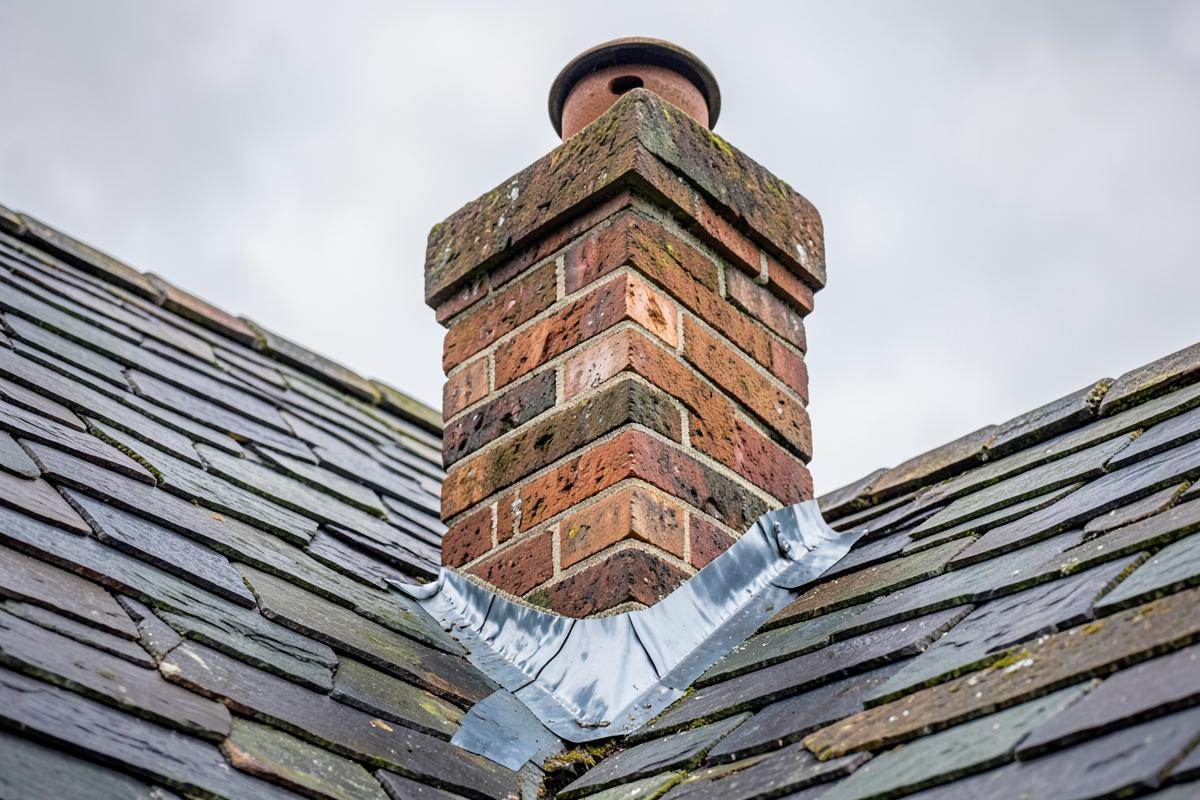
A chimney is one of the most common places for a roof to leak, because it is a hole in the roof surrounded by junctions that all have to work together. Possible causes include defective flashing, deteriorated pointing, weathered masonry, damaged coverings around the stack, or water tracking in from somewhere else entirely.
What a chimney leak is not, is automatically one thing. Anyone telling you it is definitely the flashing, or definitely needs repointing, before looking at the stack is guessing.
- More than one detail can be at fault at the same time
- Damp on a chimney breast is not always rainwater from outside
- An inspection of the stack comes before any quotation
Looking for the repair work itself? Chimney Repairs in Dublin
What you may be seeing inside
Chimney leaks tend to announce themselves in a fairly recognisable way, usually on or beside the chimney breast, often in a bedroom or on a landing, and often noticeably worse after wind-driven rain from one particular direction.
Common internal signs
- A damp patch on the chimney breast, upstairs or in the attic
- Staining that darkens during rain and fades between spells
- Tide marks or salt deposits on the plaster around the breast
- Damp appearing on the ceiling close to where the stack passes through
- Wet brickwork or timber visible around the stack in the attic
Possible causes of a chimney leak
The stack, the covering around it and the details that join the two are all candidates. In practice we often find two of these contributing together, which is one reason repairs based on a single assumption sometimes fail.
What may be at fault
- The flashing or soakers where the stack meets the roof — cracked, lifted, corroded or badly formed; see lead flashing
- Mortar joints that have deteriorated, allowing water into the masonry; see chimney repointing
- A cracked or weathered flaunching or cap on top of the stack
- Porous, spalled or frost-damaged brick or stone in the stack itself
- Slates or tiles around the stack that have slipped, cracked or been badly cut; see slate and tile repairs
- A back gutter behind the stack holding water or debris
- Water entering elsewhere and tracking down to show at the chimney
Why not every chimney leak is the flashing
Flashing gets the blame because it is the most visible detail, and it genuinely does fail — lead splits, mortar pockets release, and older cement fillets crack. But a stack with open joints can absorb water straight through the masonry and show damp internally with perfectly serviceable flashing in place.
Equally, repointing a stack that is being flooded by a failed back gutter will not stop the leak. The repair has to match the actual defect, which is why we look at the whole detail rather than the first thing that looks tired.
Disused and capped chimneys
A chimney that is no longer in use still has to keep water out, and unused stacks are often the ones that have been left longest without attention. Rain entering an uncapped flue, or a poorly sealed cap that traps moisture inside the stack, can both produce internal damp that looks exactly like a roof leak.
Where a stack is no longer needed at all, taking it down to below roof level and making the roof good is sometimes a more sensible answer than repeatedly repairing it. We will say so if that is the case rather than sell repairs to something you do not use.
How chimney leaks are usually repaired
The repair follows the defect. That might mean forming new flashing and soakers, cutting out and repointing deteriorated joints, renewing a flaunching, rebedding or replacing damaged coverings around the stack, or a combination of those.
Where a stack is leaning, badly cracked or looks unstable, we will tell you plainly that a specialist assessment may be needed before roofing work goes ahead. We are roofers, not structural engineers, and we do not pretend otherwise.
What not to do
- Do not climb onto the roof or lean a ladder against the stack to inspect it
- Do not have sealant or mastic smeared over an old flashing as a permanent fix — it traps water as often as it sheds it
- Do not agree to a full repoint before anyone has established that the mortar is the problem
- Do not ignore repeat staining because it dries out between spells of rain
How we investigate a chimney leak
1.Match the damp to the weather
Whether it appears in all rain or only with wind from one direction tells us a lot about which face of the stack is letting water in.
2.Check the attic side of the stack
Where there is access, wet brickwork, stained timbers and tracking marks on the underlay narrow the search considerably.
3.Inspect the stack and its junctions
Flashing, soakers, back gutter, pointing, flaunching, cap and the coverings for a good distance around the chimney.
4.Quote the repair the roof needs
You get a written scope that says what was found and what will be done, including how the stack will be accessed safely.
Get the roof looked at
Vantage Roofing works across Dublin city and county, with additional coverage in Kildare, Meath and Wicklow. 24/7 emergency roof repair call-outs available.
Related Services
The roofing work this usually leads to
Which of these applies depends on what the inspection finds — we will tell you plainly.
Chimney Repairs
Roofing repairs around chimney stacks — flashing, junctions, mortar and the surrounding roof covering.
Learn moreChimney Repointing
Raking out and renewing deteriorated mortar joints on chimney stacks, with the surrounding roof detailing checked.
Learn moreLead Flashing
Repairing and renewing flashing at chimneys, wall abutments, valleys and roof junctions.
Learn moreLeaking Roof Repairs
Tracing the true source of a leak and repairing it properly, rather than patching where the stain appears.
Learn moreRoof Repairs
Repairs to slate, tile and flat roofs — from a handful of slipped slates to recurring leaks.
Learn moreWhere we cover
Dublin city and county is our main service area, with additional coverage across Kildare, Meath and Wicklow.
FAQ
Roof Leaking Around a Chimney — common questions
Why does my chimney leak only when it rains?
Because the water source is rainfall reaching a defect in the stack, its flashing or the roof around it. Leaks that only appear with wind from one direction usually point to that exposed face of the chimney.
Can damaged flashing cause a chimney leak?
Yes, and it is one of the most common causes we find. Split or lifted lead, failed mortar pockets and cracked cement fillets all let water past the junction. It is not the only possible cause, though, which is why the stack is inspected as a whole.
Can pointing cause water ingress?
Deteriorated mortar joints can allow water into the masonry, and on an exposed stack that can show as damp inside. Whether repointing is the right repair depends on the condition of the stack, which needs to be seen up close.
Is damp on a chimney breast always a roof leak?
No. Condensation within a flue, salts drawn out of old brickwork, or an unrelated damp issue can all produce marks on a chimney breast. A roofing inspection tells you whether rainwater is getting in through the roof or the stack.
Do you need scaffolding for chimney work?
Often, yes. Chimney work is usually part-way up a slope rather than at the eaves, so safe access matters. We confirm what access the job needs before quoting, so the price does not change later.
Talk to a roofer
Need a Roofer in Dublin?
Need help with a roof repair, leak or roofing project? Call Vantage Roofing or request a quotation online. Fully insured, with 24/7 emergency roof repair call-outs.