
Roofing Problem
Is It Condensation or a Roof Leak?
Rainwater getting in and moisture condensing inside the roof can look remarkably similar from the landing below. The most useful distinction is the relationship with the weather: a leak follows rainfall, while condensation follows temperature, humidity and ventilation.
That test is a starting point, not a verdict. Both problems can be present in the same roof at the same time, and one can disguise the other, which is why it is often worth having the roof looked at rather than deciding from the ceiling.
- A leak follows the rain; condensation follows the cold
- Widespread light dampness points differently to one defined stain
- The two can happen together in the same roof
Looking for the repair work itself? Roof Ventilation in Dublin
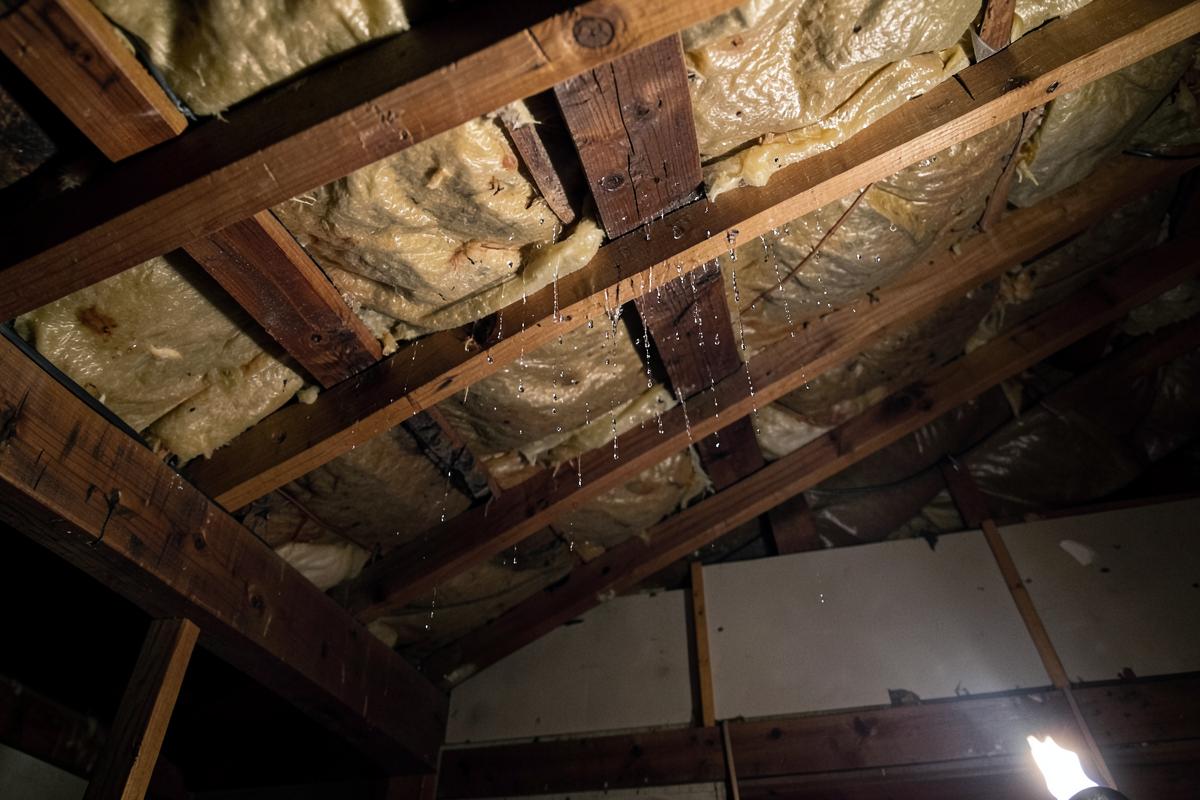
The quickest test: does it follow the rain?
Keep a simple note for a few weeks: when the damp appears or worsens, and what the weather was doing. It costs nothing and it is genuinely the most useful piece of evidence you can hand a roofer.
Damp that appears during or shortly after rainfall, and dries out between spells, behaves like water ingress. Damp that shows up on cold, still mornings with no rain at all — or that is worse in winter regardless of rainfall — behaves like condensation.
Signs that point towards a roof leak
- Appears or worsens during and after rain, particularly heavy or wind-driven rain
- A defined patch or stain with a distinct edge, often brownish or tide-marked
- Staining in one place rather than generally across the roof space
- Water tracking on underlay, rafters or a chimney stack in the attic
- Drips, or water running down a wall or a chimney breast
- Visible defects on the roof: slipped coverings, damaged flashing, a debris-filled valley
- Worse from one wind direction than another
Signs that point towards condensation
- Worse in cold weather and with no obvious link to rainfall
- Light, widespread dampness across the underside of the roof rather than one patch
- Droplets on the underlay, on nail points, on metal fixings or on cold pipework
- Black spot mould appearing on timbers, on stored items or in corners
- A damp, musty smell in the attic that is worst in winter
- Damp concentrated above a bathroom, kitchen or utility room
- Damp that improves noticeably when the roof space is better ventilated
Why condensation forms in a roof space
Ordinary living produces a surprising amount of moisture — cooking, showering, drying clothes indoors, and simply breathing. That warm, moist air rises, and any of it that reaches a cold roof space will give up its moisture on the first cold surface it meets.
Common contributing factors
- Restricted or blocked ventilation at the eaves, ridge or in the roof covering
- Insulation laid over eaves vents, closing off the airflow
- Bathroom or kitchen extractor fans discharging into the attic rather than outside
- Gaps around the attic hatch, downlighters or pipe runs letting warm air up
- Clothes dried indoors over long periods without ventilation
- A converted or partly converted attic where the build-up was not detailed for ventilation
When it is honestly both
This happens more often than people expect. A small, slow leak raises the moisture level in a roof space, which then condenses on cold surfaces and produces dampness well beyond the original defect. Fix the leak and the condensation eases, but does not disappear if ventilation was already marginal.
It works the other way too: persistent condensation keeps timbers damp, which can obscure the staining that would otherwise show where water is getting in. Neither problem excludes the other, and we would not tell you it does.
What you can do, and what needs a roofer
You can note the pattern against the weather, look into the roof space with a torch from the hatch where it is safe to do so, check that extractor fans actually discharge outside, and avoid drying washing in unventilated rooms.
What needs a roofer is the roof itself: the condition of the covering and details, whether the underlay is tracking water, whether the eaves and ridge ventilation are doing their job, and whether there are defects capable of letting rain in. A roof inspection covers both sides of that question, and if it turns out to be water ingress, leaking roof repairs is the work that follows.
On mould: keep the general caution sensible. Persistent damp and mould growth in a home is worth dealing with promptly, and if anyone in the household is concerned about health effects, that is a question for a medical professional rather than a roofer.
What not to do
- Do not seal up attic vents to stop draughts — restricting ventilation usually makes condensation worse
- Do not stuff extra insulation into the eaves and block the airflow path
- Do not leave an extractor fan discharging into the roof space
- Do not decorate over a damp ceiling before the cause has been established
- Do not climb into a roof space with poor footing or no proper access
How a roofer tells the difference
1.Take the history
When the damp appears, how it relates to rain and cold, which rooms are below, and what has changed recently in the house.
2.Read the roof space
Localised tracking and staining versus general dampness and droplets on cold surfaces — the pattern usually tells the story.
3.Check ventilation and moisture sources
Eaves and ridge ventilation, insulation blocking airflow, hatch sealing, and where extractor fans actually terminate.
4.Inspect the roof externally
Coverings, flashings, valleys, abutments and roof windows, so that water ingress is either found or properly ruled out.
Get the roof looked at
Vantage Roofing works across Dublin city and county, with additional coverage in Kildare, Meath and Wicklow. 24/7 emergency roof repair call-outs available.
Related Services
The roofing work this usually leads to
Which of these applies depends on what the inspection finds — we will tell you plainly.
Roof Ventilation
Eaves, tile, slate and ridge ventilation to move damp air out of a roof space that is not breathing.
Learn moreRoof Inspections
A proper look at the roof and attic with a clear summary of roofing condition and recommended work.
Learn moreLeaking Roof Repairs
Tracing the true source of a leak and repairing it properly, rather than patching where the stain appears.
Learn moreRoof Repairs
Repairs to slate, tile and flat roofs — from a handful of slipped slates to recurring leaks.
Learn moreVelux & Skylight Repairs
Leaking roof windows investigated and repaired, plus skylight and roof window installation.
Learn moreWhere we cover
Dublin city and county is our main service area, with additional coverage across Kildare, Meath and Wicklow.
FAQ
Condensation vs Roof Leak — common questions
How can I tell condensation from a roof leak?
Start with the weather. Damp that appears with rain and shows as a defined stain behaves like a leak; damp that appears in cold weather without rain, is spread thinly across the roof space and shows as droplets on cold surfaces behaves like condensation. Neither test is conclusive on its own.
Why is my attic damp when it hasn't rained?
Usually because warm, moist air from the house is reaching the cold roof space and condensing there. Blocked eaves ventilation, an extractor fan discharging into the attic and an unsealed hatch are among the most common reasons.
Can condensation and a roof leak happen together?
Yes, and it is common. A slow leak raises the moisture level in the roof space, which then condenses elsewhere, and persistent condensation can hide the staining that would show where rain is getting in.
Can condensation damage roof timbers?
Prolonged dampness is not good for timber or insulation, and sustained condensation is worth addressing rather than living with. Whether any damage has occurred is something to establish by looking at the roof space.
Will more insulation stop condensation?
Not by itself, and insulation pushed into the eaves can make things worse by blocking the airflow. Ventilation and controlling moisture at source generally matter more than the depth of insulation.
Do you charge to find out which it is?
Get in touch and we will talk it through. Where an inspection is the sensible next step, we will tell you what it involves and what it will cost before anyone comes out — we do not quote roofing work without seeing the roof.
Talk to a roofer
Need a Roofer in Dublin?
Need help with a roof repair, leak or roofing project? Call Vantage Roofing or request a quotation online. Fully insured, with 24/7 emergency roof repair call-outs.