
Roofing Advice
Can a Roof Be Repaired in the Rain?
Sometimes, and only in part. A roofer can often make a roof safer in the rain — covering an opening, securing loose material, limiting how much water is getting in — but a proper, permanent repair usually has to wait for suitable conditions.
That is not roofers being awkward. Wind and a wet, slippery roof surface change what can be done safely, and a number of the materials used in permanent repairs simply do not work if they are applied wet. This guide explains honestly what happens when a roof needs attention during rain, and what you can do while you wait for someone to attend.
- Safety and weather conditions decide what work can be carried out
- Temporary measures can often limit further water ingress
- Permanent repairs usually need dry, safe conditions to be done properly
Looking for the service itself? Emergency Roof Repairs in Dublin
Why weather changes what can be done on a roof
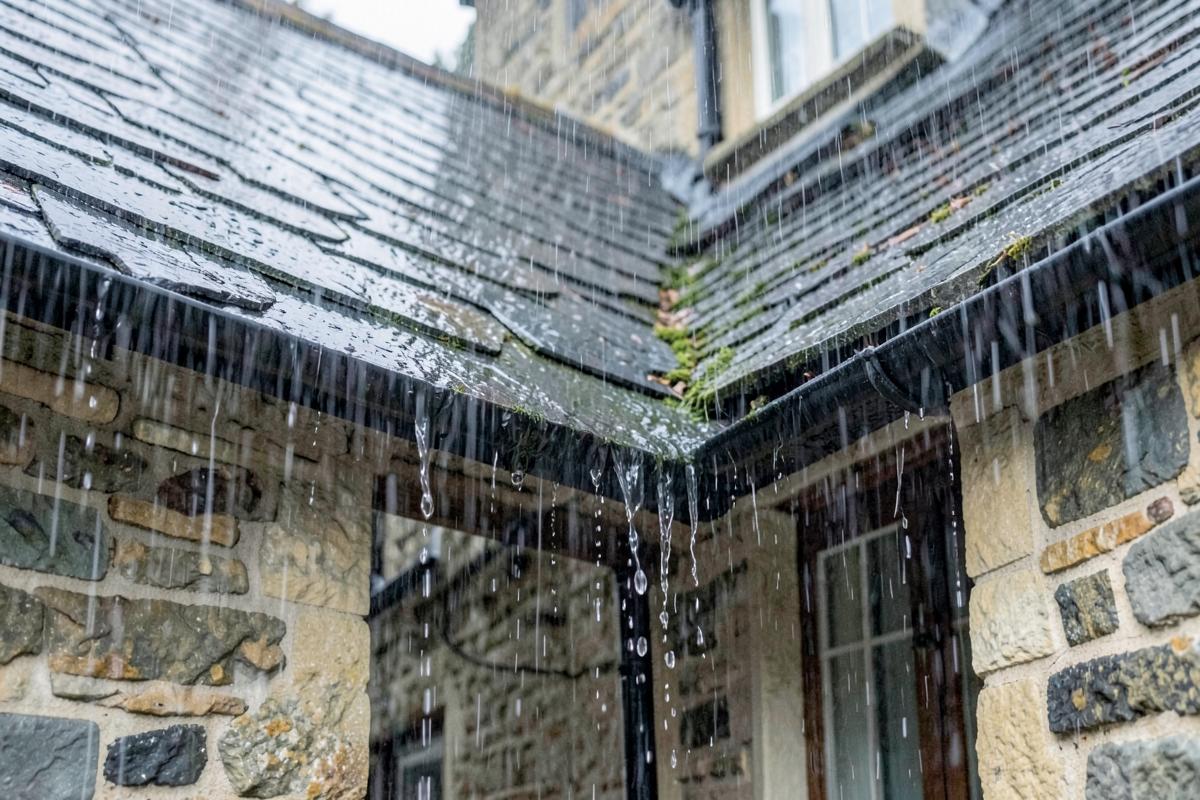
A pitched roof covered in wet slate or tile is far more slippery than the same roof dry, and wind adds a second serious risk on top of that. Roofers who work at height plan around both, because a fall from a roof is one of the most serious accidents in the trade. If conditions are not safe, the sensible and professional decision is not to go up, no matter how urgent the leak feels from inside the house.
This is the same reasoning behind the safety advice on our emergency roof repairs page: getting someone up safely always comes before getting the job done quickly.
What can often be done during rain
Where access is safe — and it is not always safe in heavy rain or high wind — a roofer attending during bad weather is usually focused on making the roof safe and reducing further damage rather than finishing the job outright.
Typical make-safe measures
- Securing or removing loose slates, tiles or ridge pieces that could come down or let more water in
- Covering an opening with a temporary waterproof sheet, weighted or fixed down securely
- Clearing an obviously blocked gutter or outlet that is making a flat roof or valley worse
- Tracing, where it is safe to see, roughly where water is entering
- Advising you on what to do inside the house in the meantime
Why some repairs cannot be done properly in the rain
A number of standard roofing materials depend on dry conditions to work at all, never mind to last. Adhesives and sealants used in lead flashing and detailing work need a dry, clean surface to bond to. GRP fibreglass laminating is applied wet but needs a dry substrate and the right conditions to cure correctly — laminating over a damp deck is one of the most common causes of early flat roof failure. Torch-on felt and other hot works involve an open flame and hot bitumen, which is its own hazard in wind and rain and does not adhere properly to a wet surface. Mortar for pointing a chimney or bedding a ridge simply will not cure properly if it is rained on before it sets.
A roofer who tells you a permanent repair has to wait for the weather to improve is not stalling — they are protecting you from paying for a repair that will fail within weeks.
Does the type of roof or defect change the answer?
Yes. A single slipped slate on a low, easily accessed roof is a different proposition to a chimney leak four storeys up, or a split in a flat roof membrane that needs a dry deck to laminate over. Some defects can be safely and permanently fixed in a dry spell between showers; others genuinely need a settled period of dry weather.
The roof covering itself matters too. Natural slate and clay or concrete tile roofs can sometimes have a slipped unit refixed with reasonable safety in light rain if access is good, whereas flat roofing repairs involving adhesives, GRP or hot works are far more weather-dependent. If you're unsure which category your problem falls into, our roof leak after heavy rain guide covers common patterns.
Access and equipment in wet weather
Ladders, towers and scaffolding all become more hazardous in wet and windy conditions, and some access equipment simply cannot be used safely once wind speeds pick up. This is another reason a call-out during a storm may focus on what can be reached and made safe from the ground or from a safely positioned point, rather than a full repair across the whole roof.
It is also why we do not promise arrival times or completion times for weather-affected work — conditions on the day decide what is possible, and safety takes priority over a schedule.
What a roofer typically does on a wet call-out
A genuinely urgent call-out during rain generally follows the same pattern: make the property safe first, limit further water ingress where it can be done safely, trace the likely source where visibility allows, and then arrange to return in suitable conditions to carry out the permanent repair once the defect can be properly assessed and worked on.
This two-stage approach — make safe now, repair properly later — is standard practice across the industry, and it applies whether the issue is a leaking roof, a problem around a chimney, a skylight or a blocked valley.
What should I do if my roof is leaking right now?
Focus on safety inside the house, not on getting up onto the roof.
Immediate steps
- Stay well clear of any ceiling that is bulging, sagging or dripping heavily — it may be holding a significant weight of water.
- Move or cover belongings only where you can do so safely, away from the affected area.
- Be very cautious around light fittings, switches and sockets near the leak. If water is at or near any electrics, do not touch them, do not use that circuit, and switch it off at the consumer unit if you are in any doubt.
- Contain a steady drip with a container where it is safe to reach, and empty it before it overflows.
- Do not climb onto the roof and do not send anyone else up, regardless of how straightforward the problem looks from the ground.
- Call for professional help rather than attempting to trace or fix the source yourself.
Getting help
Emergency roof repair call-outs are available 24 hours a day, 365 days a year on 087 466 6010. We will talk through what you're seeing, advise on immediate safety, and get to the make-safe work as soon as conditions allow.
Once the weather settles, the permanent repair can usually be assessed properly and carried out — see roof repairs for how that stage works, and our roof repair cost guide for what typically drives pricing.
Get a price for your own roof
The only accurate figure is one based on your roof. Request a quotation or call Vantage Roofing and we will tell you what is involved.
Related Services
The roofing work behind this guide
Dublin city and county is our main service area, with additional coverage across Kildare, Meath and Wicklow.
Emergency Roof Repairs
Urgent help for active roof leaks, storm damage and roofing problems that cannot safely wait — 24/7 call-outs.
Learn moreLeaking Roof Repairs
Tracing the true source of a leak and repairing it properly, rather than patching where the stain appears.
Learn moreRoof Repairs
Repairs to slate, tile and flat roofs — from a handful of slipped slates to recurring leaks.
Learn moreFlat Roofing
Flat roof repairs and replacement on extensions, dormers, garages and porches across Dublin.
Learn moreFAQ
Roof Repairs in the Rain — common questions
Will a roofer come out in the rain?
For a genuine emergency, yes — a roofer will attend and assess what can safely be done. What gets carried out on the day depends on wind, rain intensity and safe access, which is why call-outs during severe weather often focus on making the roof safe rather than a full repair.
Can a temporary repair actually stop a leak?
A temporary covering or fix can often reduce or stop water getting in further, but it is exactly that — temporary. It is not a substitute for a permanent repair once conditions allow one to be carried out properly.
Why won't a roofer just seal it with sealant in the rain?
Most sealants and adhesives need a dry, clean surface to bond to. Applying them to a wet surface usually means they fail quickly, so a job like that can end up needing to be redone anyway.
Is it dangerous for a roofer to work on a roof in the rain?
Yes, more so than in dry conditions. Wet slate and tile are slippery, and wind adds further risk. A professional roofer will judge conditions on the day and prioritise safe access over speed.
What if the rain doesn't stop for days?
The make-safe measures put in place during the call-out are there to hold the situation while you wait. If the leak worsens or the make-safe measure fails, call again — do not wait it out if water is actively getting into the house.
More Guides
Other cost and decision guides
Talk to a roofer
Need a Roofer in Dublin?
Need help with a roof repair, leak or roofing project? Call Vantage Roofing or request a quotation online. Fully insured, with 24/7 emergency roof repair call-outs.