
Roofing Problem
Can a Blocked Roof Valley Cause a Leak?
Yes, it can. A valley carries the water from two roof slopes at once, so anything restricting it has an outsized effect. When leaves, moss, grit or a nest hold water back, the water rises above the level the covering was designed to shed and can get in under the slates or tiles either side.
Clearing the blockage is often the right first step, but it is not always the whole job. Water that has already been backing up may have damaged the valley lining or the coverings along its edges.
- Valleys handle more water than any other part of a pitched roof
- A cleared valley may still leak if the lining has been damaged
- Never go up to clear a valley yourself
Looking for the repair work itself? Roof Valley Repairs in Dublin
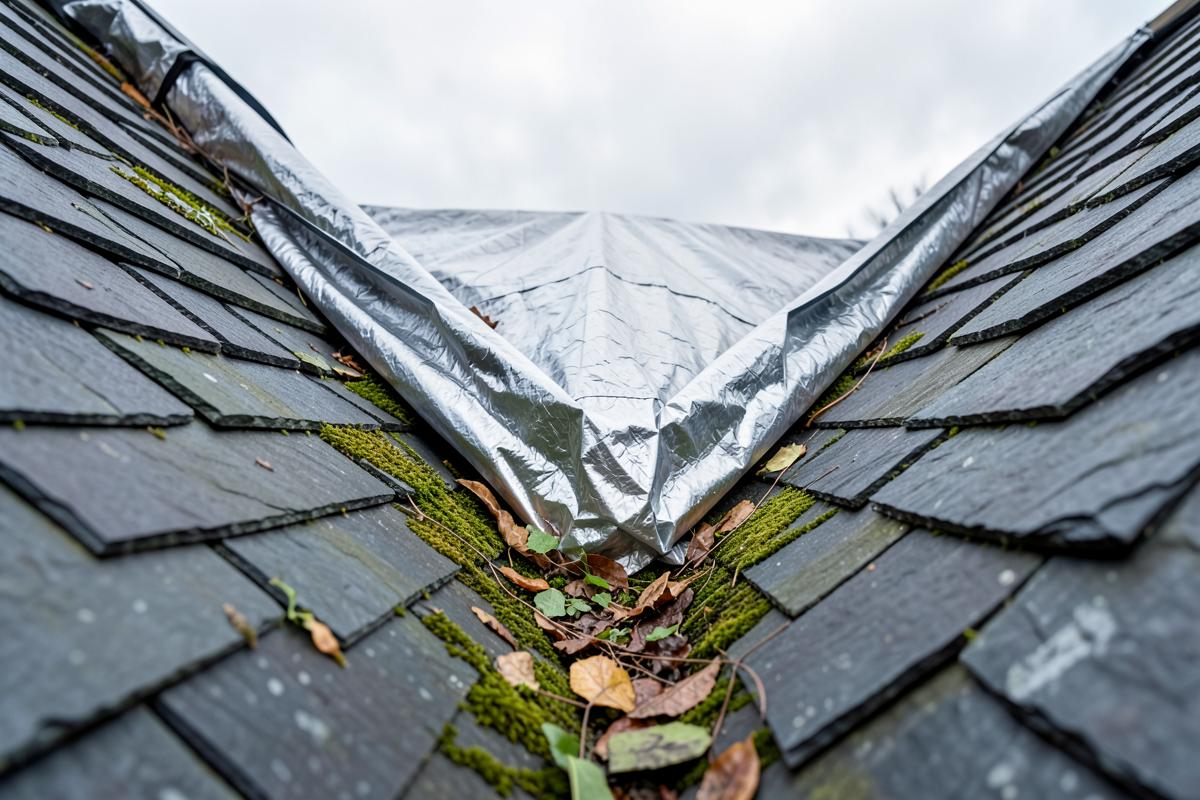
What a roof valley does
Where two roof slopes meet at an internal angle, the valley is the channel that takes the combined run-off and carries it down to the gutter. On a house with a rear return, a dormer or an extension, a single valley can be handling rainwater from a large area of roof.
Because of that concentration, valleys are one of the details most likely to cause a leak when something goes wrong — and one of the least likely to be noticed from the ground.
How blockages build up
Valleys are a natural collection point. Anything that lands on either slope tends to wash into the channel, and once a small amount lodges, the rest builds up behind it.
Typical causes
- Leaves and twigs, particularly where there are trees close to the house
- Moss washing down off the slates or tiles
- Grit and granules shed by older coverings
- Silt building up at a shallow point in the channel
- Birds' nests, or debris carried in by them
- Mortar and rubble left behind after earlier work on the roof
Signs of a valley problem
Most of these can be seen from the ground or from a window, which is where any looking you do should stop.
What to look for
- Visible debris, moss or plant growth sitting in the valley
- Water running or spilling over the edges of the valley during rain
- Damp appearing internally along the line where two roof sections meet
- Staining on a ceiling or wall below a valley, particularly after heavy rain
- Slates or tiles along the valley edge that look uneven, cracked or displaced
- Gutter below the valley overflowing at one spot
Why clearing alone may not be enough
By the time a blockage is noticed, water has often been backing up in that valley for several seasons. Standing water works at the lining, at the laps in it, and at the cut edges of the slates or tiles beside it.
So a valley that has been clogged may also have a corroded or split lining, open laps, loose or broken cut slates, or perished mortar along the edges. Clearing the debris removes the immediate cause; it does not put right damage that has already happened. Our roof valley repairs page covers what that work involves.
Repair or renewal of the valley
Where the lining is sound and only the edges need attention, a localised repair is usually the right answer. Where the lining itself has failed along its length, renewing the valley — and the coverings along it — is generally better value than repeatedly patching it.
Valleys come in several forms and materials, and we identify what is actually there before recommending anything.
What not to do
- Do not climb onto the roof or use a ladder to clear a valley — it means working at the steepest, most exposed part of a roof
- Do not push a rod or hose up into a valley from the gutter, which can lift laps and dislodge cut slates
- Do not use a pressure washer on a valley or the coverings around it
- Do not assume the leak is fixed because the debris has gone
How we deal with a blocked valley
1.Inspect before clearing
What is in the valley, how far the build-up extends, and what condition the lining and edges are in underneath it.
2.Clear it properly
Debris removed by hand from safe access rather than flushed through, so laps and cut coverings are not disturbed.
3.Check what the water has done
Lining laps, corrosion or splits, the condition of the cut slates or tiles along each edge, and the mortar where it is used.
4.Repair or renew, and say which
You get told plainly whether the valley now needs work or whether clearing it was genuinely all it needed.
Get the roof looked at
Vantage Roofing works across Dublin city and county, with additional coverage in Kildare, Meath and Wicklow. 24/7 emergency roof repair call-outs available.
Related Services
The roofing work this usually leads to
Which of these applies depends on what the inspection finds — we will tell you plainly.
Roof Valley Repairs
Repairs to leaking, blocked and deteriorated roof valleys, including the slates and flashing either side.
Learn moreLeaking Roof Repairs
Tracing the true source of a leak and repairing it properly, rather than patching where the stain appears.
Learn moreRoof Repairs
Repairs to slate, tile and flat roofs — from a handful of slipped slates to recurring leaks.
Learn moreSlate & Tile Repairs
Replacing slipped, cracked and missing slates and tiles, plus ridge, hip and verge repairs.
Learn moreGuttering
Gutter repairs, clearing, realignment and replacement, including downpipes and rainwater outlets.
Learn moreWhere we cover
Dublin city and county is our main service area, with additional coverage across Kildare, Meath and Wicklow.
FAQ
Blocked Roof Valley — common questions
Can leaves block a roof valley?
Yes, and they are the most common cause, particularly where trees overhang or stand close to the house. Leaves lodge in the channel, then moss and grit build up behind them.
Can a blocked valley cause water to enter the roof?
It can. When the channel cannot carry the flow, water backs up above the level the slates or tiles were designed to shed and can get in at the valley edges.
Does a leaking valley always need replacement?
No. Where the lining is sound and the problem is debris or a few damaged edge slates, a clear-out and localised repair is often enough. Renewal is for linings that have split, corroded or opened along their length.
How often should a roof valley be cleared?
It depends entirely on the surroundings. A house under mature trees may need the valleys and gutters checked every autumn; an exposed house with nothing overhanging it may go for years. Having it looked at as part of a [roof inspection](/roof-inspections) is the practical approach.
Can I see a blocked valley from the ground?
Sometimes — debris, moss or plant growth in the channel is often visible from the garden or an upstairs window of an adjoining part of the house. What you cannot see from there is the condition of the lining underneath it.
Talk to a roofer
Need a Roofer in Dublin?
Need help with a roof repair, leak or roofing project? Call Vantage Roofing or request a quotation online. Fully insured, with 24/7 emergency roof repair call-outs.