
Roofing Problem
Moss on Your Roof: What It Means and What to Do
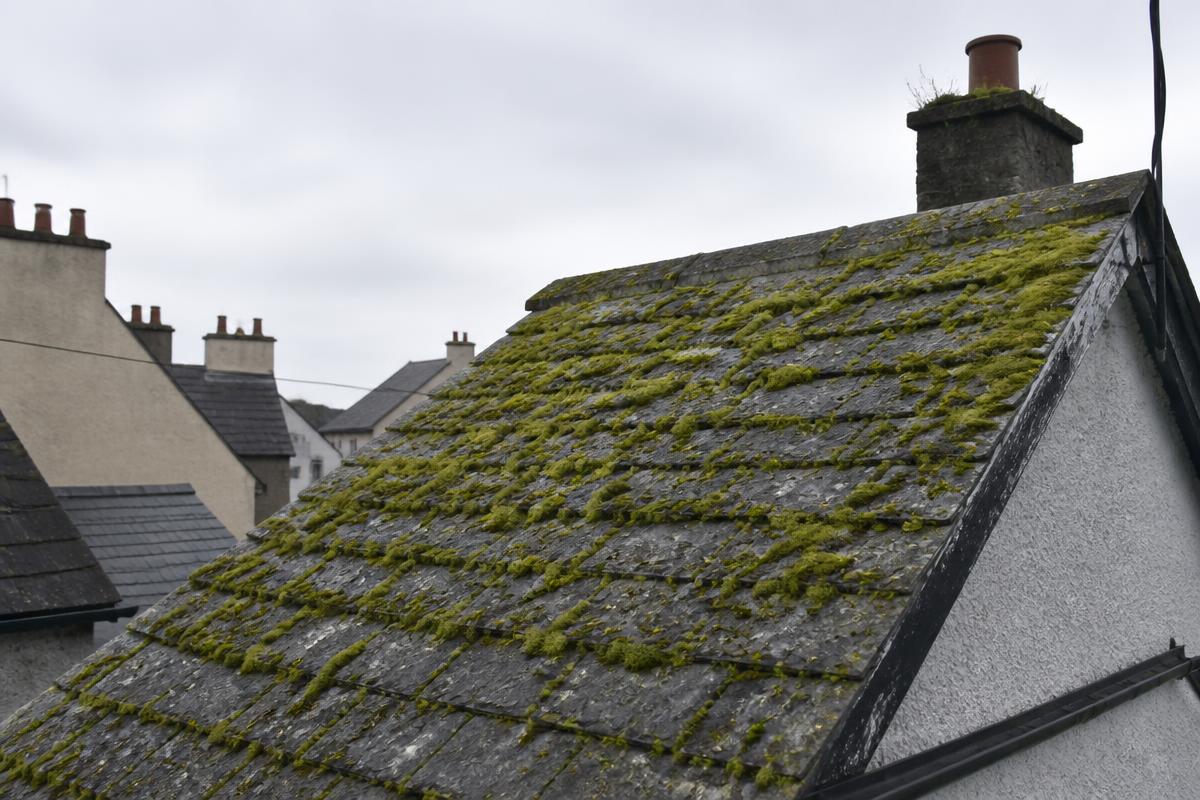
Moss on a roof is extremely common in Ireland and does not, on its own, mean the roof has failed. Damp, sheltered, north-facing slopes grow moss on perfectly sound coverings. What matters is where the moss is, how thick it has become, and what it is doing to the water that has to leave your roof.
The two things worth taking seriously are drainage and condition. Moss that breaks away and packs into gutters and valleys causes overflow and leaks. Moss that has taken hold deep in the joints of a covering is usually telling you the covering itself is holding moisture, which is a condition question rather than a cleaning question.
- Moss is normal on Irish roofs and is not proof of damage
- Blocked gutters and valleys are the real risk, not the green colour
- Pressure washing a roof covering can do more harm than the moss
Looking for the repair work itself? Roof Cleaning & Moss Removal in Dublin
Before anyone cleans a roof
Moss removal is roof work. It is carried out from safe access, by hand and with appropriate tools, and it should only happen once someone knows what the covering underneath will tolerate.
- Do not go up to scrape, brush or wash moss off yourself — it is work at height on a surface made slippery by the very thing you are removing.
- Pressure washing can do real damage to a sound roof. High-pressure water can be driven under slates and tiles, can erode the surface of concrete tiles, and can put water into the roof space.
- Chemical treatments are not all alike, and some are unsuitable for natural slate, lead or a nearby planting scheme. Ask what is being applied and why.
- Cleaning a roof that is already deteriorating will expose the deterioration rather than fix it. The condition question comes first.
Why moss grows where it grows
Moss needs moisture, shade and something to hold on to. On a Dublin house that usually means a north or east-facing slope, a roof overshadowed by trees or a taller neighbouring building, or a slope that stays damp because it drains slowly. Concrete tiles, which have a rougher surface than natural slate, tend to hold it faster.
So the presence of moss tells you about the roof's exposure before it tells you about its condition. A twenty-year-old tiled roof on a shaded slope can be thick with moss and entirely sound. The same growth on a covering that is already spalling, delaminating or losing surface is a different conversation.
What moss can actually cause
The damage moss does is mostly indirect. It is what happens to water when moss gets in the way.
The real risks
- Moss breaking away in wind and rain and packing into gutters, so they overflow down the wall and into the fascia — see guttering
- Valleys filling with moss debris until water backs up sideways under the covering — see blocked roof valley
- Downpipes and flat roof outlets blocking with washed-down material
- Thick growth holding moisture against a covering and its fixings for long periods, particularly through winter
- Moss bridging the laps of slates, so water is carried across a joint instead of over it
- Weight and water retention adding up on a roof where the covering or battens are already tired
When moss is a symptom of something else
Sometimes the moss is not the story. Heavy, sudden growth in one area can point at a slope that is holding water because a covering has slipped, a gutter is overflowing back onto the roof, or a flat roof is not draining. In those cases cleaning the moss off would make the roof look better for a season and change nothing.
The same is true where moss appears alongside perished mortar along the ridge line, crumbling slate edges, or a slope that is visibly uneven — see sagging roof. Those are condition signals, and they are the reason a look at the roof is worth more than a clean.
Why pressure washing is the wrong tool
It can make a roof look transformed quickly, and it can shorten its life just as quickly. A lance at working pressure can force water up under the laps of slates and tiles, past the point where the covering was designed to shed it, and into the roof space. On concrete tiles it can erode the surface finish, which is part of what limits how much water the tile absorbs.
Aggressive cleaning can leave some roof surfaces rougher or more absorbent than before, which may encourage earlier regrowth. Careful removal by hand, with the right tools and appropriate treatment where it suits the covering, is slower and considerably kinder to the roof.
How moss removal should be approached
We look at the covering first and say what it will take. On a sound roof, removal is done by hand from safe access, the gutters, valleys and outlets are cleared of what comes down, and the roof is left to shed water properly again. Where the covering is at the end of its life, we will say that instead of cleaning it — see roof repair vs replacement.
Roof cleaning and moss removal sets out how we carry the work out, and roof inspections covers the look at the covering that sensibly comes first.
What not to do about moss
- Climb up to brush, scrape or wash it — wet moss on a pitched roof is as slippery as ice
- Pressure-wash slates, tiles or a flat roof covering, or let anyone do it on your behalf
- Use a wire brush or scraper hard enough to take the surface off a tile with the moss
- Apply a chemical treatment without knowing whether it suits your covering, your leadwork and your garden
- Assume a green roof needs replacing — and equally, assume a clean roof is a sound one
How we look at a mossy roof
The question is never just how much moss there is. It is what the covering underneath is doing and where the water is going.
1.Look at the covering, not the colour
Whether the slates or tiles are sound, spalling, delaminating or losing surface decides whether cleaning is worth doing at all.
2.Follow the drainage
Gutters, valleys, downpipes and outlets are checked for moss debris, because that is where moss actually causes leaks.
3.Check the detailing
Ridge, hip and verge mortar, flashings and abutments are inspected — growth often gathers first where a detail has started to break down.
4.Work out why it is thriving
Shade, overhanging trees, a slope that is not shedding properly or a gutter discharging back onto the roof all change the recommendation.
5.Say what removal will and will not achieve
On a sound roof, cleaning plus clearing the rainwater goods is worthwhile. On a failing one, we will tell you it is money spent on appearance.
Get the roof looked at
Vantage Roofing works across Dublin city and county, with additional coverage in Kildare, Meath and Wicklow. 24/7 emergency roof repair call-outs available.
Related Services
The roofing work this usually leads to
Which of these applies depends on what the inspection finds — we will tell you plainly.
Roof Cleaning & Moss Removal
Careful moss removal and roof cleaning, with gutters, valleys and outlets cleared — no pressure washing.
Learn moreRoof Inspections
A proper look at the roof and attic with a clear summary of roofing condition and recommended work.
Learn moreGuttering
Gutter repairs, clearing, realignment and replacement, including downpipes and rainwater outlets.
Learn moreRoof Valley Repairs
Repairs to leaking, blocked and deteriorated roof valleys, including the slates and flashing either side.
Learn moreRoof Maintenance
Preventative roof maintenance visits for homeowners, landlords, managed blocks and commercial buildings.
Learn moreWhere we cover
Dublin city and county is our main service area, with additional coverage across Kildare, Meath and Wicklow.
FAQ
Moss on the Roof — common questions
Does moss damage a roof?
Not directly, in most cases. The damage comes from moss blocking gutters, valleys and outlets so water goes where it should not, and from thick growth holding moisture against a covering that is already deteriorating. A sound roof with moss on a shaded slope is a common and largely cosmetic situation.
Should I pressure wash my roof?
No. Pressure washing forces water under slates and tiles and strips the protective surface off concrete tiles, which often leaves the roof absorbing more water and regrowing moss faster. Removal by hand from safe access, with treatment suited to the covering, is the appropriate approach.
Will moss grow back after it is removed?
In Irish conditions, on a shaded slope, some regrowth over time is normal. How quickly depends on exposure, the covering and whether an appropriate treatment was used. Anyone promising a roof will never grow moss again is overstating it.
Does moss mean my roof needs replacing?
Not by itself. What decides that is the condition of the covering, the fixings and the detailing underneath. Moss is often the reason someone looks properly at a roof for the first time in years, which is useful, but it is not the evidence.
Do you remove moss from roofs?
Yes. We carry out moss removal and roof cleaning, and we clear the gutters, valleys and outlets that the moss has been feeding. We look at the covering first, because cleaning a roof that is failing is not the right recommendation.
Talk to a roofer
Need a Roofer in Dublin?
Need help with a roof repair, leak or roofing project? Call Vantage Roofing or request a quotation online. Fully insured, with 24/7 emergency roof repair call-outs.