
Roofing Advice
When Does a Roof Need Replacing?
One leak does not mean a roof needs replacing. Most roofs that develop a problem are repaired, not replaced, and that remains true even for roofs that are getting on in years. Replacement becomes the sensible option when the roof has widespread deterioration, recurring problems in different places, or damage that repair genuinely can't address cost-effectively.
This guide sets out the indicators worth taking seriously, and just as importantly, the situations where a repair is still the right call. If you already know you have a specific leak or defect, our leaking roof repairs and water coming through ceiling pages deal with that directly.
- A single leak or a handful of slipped slates is very rarely a reason to replace a roof
- Replacement suits widespread deterioration, not isolated defects
- A proper inspection, not a guess from the ground, should decide which situation you're in
Looking for the service itself? New Roofs & Roof Replacement in Dublin
Widespread deterioration across the covering
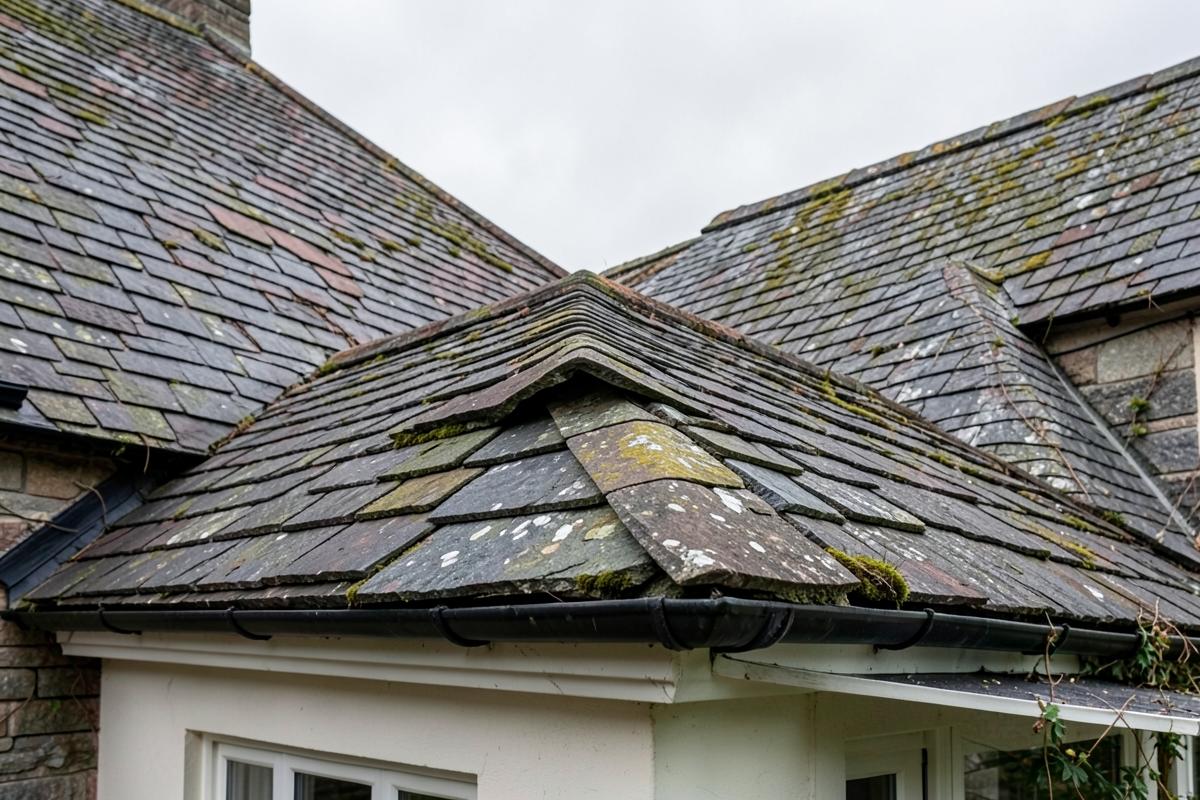
If slates or tiles are cracking, slipping or delaminating in noticeable numbers across multiple slopes rather than in one localised area, that points towards the covering reaching the end of its useful life generally, rather than one isolated defect. The same applies to a flat roof where the membrane is cracked, blistered or perished over a large area rather than at one detail.
The key distinction is spread. A dozen slipped slates concentrated around one chimney is a repair. A dozen slipped slates scattered across every slope, with more turning up each winter, is a different picture.
Recurring leaks in different places
A leak that keeps coming back after being repaired is worth investigating properly, but a leak that appears in a new location each time — rather than the same spot reopening — suggests the underlay or the roof's general weathertightness is failing, not that any single repair was done badly.
One useful test: has the roofer been back to the same defect repeatedly, or to a different part of the roof each time? The first suggests an unresolved repair; the second suggests the roof as a whole needs a harder look. Our roof inspections service is built around finding that distinction before more money goes into patching.
Extensive damaged or delaminating coverings
Fibre cement slate that has become brittle and is cracking under normal weathering, felt that has lost its surface finish and is cracking across large areas, or concrete tiles that are spalling in number, are all signs of a covering reaching the end of its practical service rather than suffering one-off damage.
This is different to storm damage, which can look dramatic but often affects a limited number of units that can be replaced individually — see storm damage repairs.
Repeated patch repairs
Every roof gets the odd repair over the years, and that is normal, sensible maintenance. It becomes a different signal when repairs are happening annually, in the same general area, without ever fully resolving the problem. At that point, the cost of patching starts working against you rather than for you.
This is exactly what our roof repair vs replacement guide is for — it walks through how to weigh continued repair against replacement once patching has become a pattern rather than an occasional job.
Failed detailing across the roof
One failed flashing or one deteriorated valley is a repair — see lead flashing and roof valley repairs. Detailing failing at several separate points around the same roof — multiple valleys, several abutments, chimney and verge flashings all showing similar deterioration — suggests the materials used originally, or their age, have reached a point where wholesale renewal of the detailing, and possibly the roof, makes more sense than repairing each one in turn.
Deteriorated underlay, battens or nail fatigue
Underlay that has become brittle and is splitting throughout the roof void, battens that have lost their strength, or widespread nail fatigue causing slates to slip in growing numbers across the roof, are all issues underneath the visible covering. These are usually found during an inspection with attic access rather than from the ground, and because they affect the whole roof structure rather than one area, they tend to point towards replacement once the extent is confirmed.
Sagging or structural concerns
A roofline that sags, dips or looks uneven from the outside can indicate a structural issue with the rafters, purlins or supporting structure, and this needs assessment by a qualified structural professional rather than judged by eye. Our sagging roof page explains what typically causes this and what to do next.
Structural issues are a separate question to the roof covering's condition. A sagging roof can sometimes have a perfectly serviceable covering, and a roof with a worn covering can have sound structure underneath. Each needs its own assessment.
Age in context, not in isolation
An older roof is more likely to be showing several of the signs above simultaneously, which is why age and condition are often discussed together. But age by itself, without any of these indicators present, is not a reason to replace a roof. Plenty of roofs well past general industry age guidance are still weathertight and structurally sound. See our guide on how long a roof lasts for how that plays out by material.
Repairability and how much previous work is already on the roof
Repairability itself is a factor. A roof covered in a discontinued slate or tile, where matching replacement units are increasingly hard to source, becomes harder to repair convincingly over time even if the defect itself is small. Similarly, a roof that already carries substantial past repair work in several areas has less "headroom" left before the next repair is disproportionate to the roof's remaining value.
When repair is still the right call
Isolated storm damage, a single failed flashing, a handful of slipped or cracked slates, a leaking valley on an otherwise sound roof, or one recurring issue with a clear, fixable cause are all situations where targeted repair remains the sensible option, regardless of the roof's age. Replacing a roof to fix a localised problem is rarely good value.
If your roof falls into this category, our roof repairs and emergency roof repairs pages cover how we approach that work.
Repair or replace?
In short: isolated, localised defects on an otherwise sound roof point to repair; widespread deterioration, recurring failures in different areas, or a pattern of repeated patching point towards replacement. Our dedicated roof repair vs replacement guide sets out the fuller comparison, including how the decision plays out in practice, so we won't repeat it here.
If you decide replacement is the right direction, new roofs and slate roof replacement cover what that involves, and our new roof cost guide and roof repair cost guide explain what drives pricing on each path.
Get a price for your own roof
The only accurate figure is one based on your roof. Request a quotation or call Vantage Roofing and we will tell you what is involved.
Related Services
The roofing work behind this guide
Dublin city and county is our main service area, with additional coverage across Kildare, Meath and Wicklow.
New Roofs & Roof Replacement
Full re-roofing and roof replacement, where repairs are no longer a sensible long-term option.
Learn moreSlate Roof Replacement
Re-slating and full slate roof replacement where a covering has reached the end of its useful life.
Learn moreRoof Repairs
Repairs to slate, tile and flat roofs — from a handful of slipped slates to recurring leaks.
Learn moreRoof Inspections
A proper look at the roof and attic with a clear summary of roofing condition and recommended work.
Learn moreFAQ
When a Roof Needs Replacing — common questions
If my roof is leaking, does that mean it needs replacing?
Not on its own. Most leaks come from a specific, repairable defect — a slipped slate, a failed flashing, a cracked valley. Replacement is usually about the overall condition of the roof, not one leak.
How do I know if repairs are becoming a pattern rather than normal maintenance?
If the same general area needs attention roughly every year, or new defects keep appearing faster than they can reasonably be fixed one at a time, that is worth having properly assessed rather than treating as ordinary upkeep.
Can a roof look fine from the ground but still need replacing?
Yes. Underlay, battens and nail fixings deteriorate out of sight, and problems like widespread nail fatigue are usually only found from the roof void or up close during an inspection.
Is a sagging roof always structural?
Not always, but it should always be checked by a qualified structural professional rather than assumed to be cosmetic. Sagging can have several causes, and some are more serious than others.
Does storm damage automatically mean I need a new roof?
Usually not. Storm damage is often a set of individual defects — displaced slates, damaged flashing, debris impact — that can be repaired, even if several need attention at once.
Who should I ask for an honest opinion on repair versus replacement?
A roofer who inspects the roof properly, including attic access where possible, and explains what they find rather than quoting a decision before looking. That is what our [roof inspections](/roof-inspections) are for.
More Guides
Other cost and decision guides
Talk to a roofer
Need a Roofer in Dublin?
Need help with a roof repair, leak or roofing project? Call Vantage Roofing or request a quotation online. Fully insured, with 24/7 emergency roof repair call-outs.